


Medical Escort for Patients with Dementia: Planning Safe and Supportive International Travel
International travel can be challenging for people living with dementia, particularly when unfamiliar environments, changes in routine, and long journeys cause confusion or anxiety. For families living in different countries, arranging travel for a loved one with memory difficulties may involve important decisions about supervision, mobility, medication, and emotional well-being. Whether an older parent is returning home after medical treatment, travelling to reunite with family, or being transferred to another country for continued care, understanding their individual needs is essential. Medical escort services may provide additional assistance for eligible travellers who need professional support during an international journey.
Dementia affects people differently. Some individuals can communicate clearly and manage many everyday activities, while others need substantial assistance with personal care, orientation, and decision-making. Consequently, there is no single travel arrangement suitable for everyone with dementia. A journey that is manageable for one person may be distressing or inappropriate for another. Families should consult the treating healthcare professional, assess the person’s ability to tolerate travel, and determine whether a family caregiver, medical escort, or specialized medical transportation service is most appropriate. Careful preparation can help reduce avoidable stress and support the traveller’s comfort and dignity.
Understanding the Challenges of International Travel for People with Dementia
Dementia can affect memory, communication, judgment, and the ability to recognize unfamiliar surroundings. These changes may make a long international journey more complicated, especially when it involves busy airports, security procedures, flight connections, and unexpected delays.
A person who usually feels comfortable at home may become confused in an unfamiliar airport. They may forget where they are going, struggle to follow instructions, or become anxious when separated from familiar people. Changes in sleep patterns, fatigue, and disruption to everyday routines can also affect their experience.
Families should consider several questions before planning travel:
Can the person understand and follow basic travel instructions?
Are they likely to become confused or distressed in unfamiliar environments?
Do they need help with medication, meals, or personal care?
Can they recognize and communicate their needs to airport staff?
Do they have mobility limitations or other medical conditions?
Will they need continuous supervision throughout the journey?
Can a family member accompany them, or is additional professional support needed?
These considerations can help families identify potential difficulties and decide what support should be arranged before departure.
What Is a Medical Escort for a Person with Dementia?
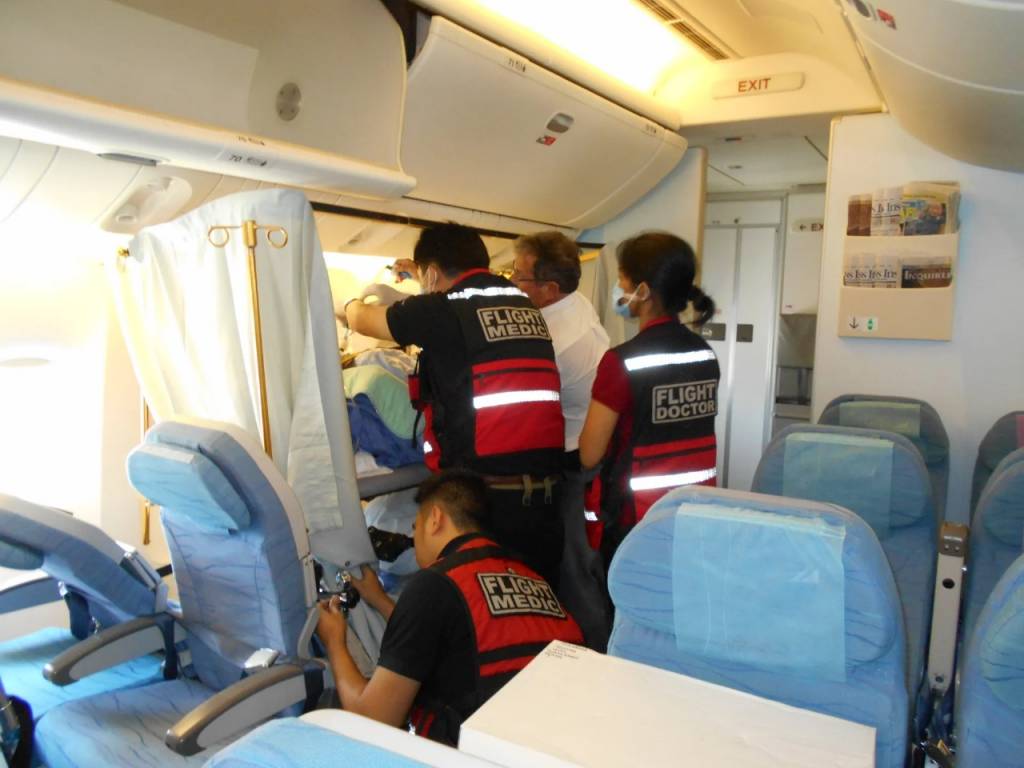
A medical escort is a suitably qualified healthcare professional who accompanies a patient during travel and provides support according to the patient’s assessed needs. For a person living with dementia, the appropriate support may include assistance with mobility, observation of changes in condition, coordination of prescribed medication schedules, and communication with family members.
Depending on the person’s condition and the agreed service, an escort may also help maintain a predictable routine and provide calm reassurance when the traveller feels confused or overwhelmed.
However, a medical escort is not automatically a substitute for a specialist dementia caregiver. The type of professional required depends on the person’s cognitive abilities, behavioural symptoms, physical health, and level of independence.
Before arranging the service, families should explain any history of wandering, agitation, disorientation, communication difficulties, or other behaviours that could affect travel. This information helps the transport team assess whether the proposed arrangement is appropriate.
Depending on the individual case, support may include:
Assistance navigating airports and boarding procedures.
Supervision during connecting flights and airport transfers.
Support with mobility and personal-care needs within the agreed scope.
Assistance following prescribed medication schedules.
Observation of relevant symptoms or changes in condition.
Communication with family members during the journey.
Coordination of ground transportation at departure and arrival.
Assistance maintaining a familiar and reassuring travel routine.
The precise level of care should be agreed upon before departure, with the person’s safety, preferences, and dignity remaining central to the plan.
How to Determine Whether a Person with Dementia Can Travel
A dementia diagnosis does not automatically prevent someone from travelling internationally. The decision depends on the person’s current condition, cognitive abilities, physical health, behaviour, and capacity to manage the demands of the proposed journey.
Some individuals in the early stages of dementia may be able to travel with a trusted family member and appropriate airport assistance. Others may require a dedicated caregiver or medical escort. People with advanced dementia, severe behavioural symptoms, or significant medical complications may need a more detailed assessment before travel is considered.
Families should discuss the proposed journey with the treating physician, particularly if the person has recently experienced worsening confusion, a fall, an acute illness, or a change in medication.
The assessment should consider:
The person’s ability to tolerate a long flight.
Their current cognitive and physical condition.
Any medical conditions that may affect air travel.
Their ability to eat, drink, rest, and use the toilet during the journey.
The likelihood of distress or disorientation in unfamiliar settings.
The level of supervision and personal care required.
The availability of suitable support at the destination.
Sudden or unusual confusion should not automatically be attributed to dementia. It may indicate an acute medical problem that requires prompt clinical assessment before any travel plans proceed.
Preparing a Person with Dementia for an International Journey
Preparation can make travel more predictable and help families anticipate situations that might cause distress. The approach should be tailored to the person’s abilities and preferences rather than relying on a standard checklist alone.
1. Consult the Treating Healthcare Professional
Discuss the proposed itinerary, duration of travel, current symptoms, medication, and any previous difficulties during journeys.
The healthcare professional can help assess whether travel is appropriate and identify any medical or behavioural concerns that require additional planning.
2. Maintain Familiar Routines
People with dementia may find sudden changes in routine unsettling. Where possible, keep familiar meal times, medication schedules, and rest periods consistent with the person’s needs.
Explain the journey using simple language and repeat important information when necessary. Some people may benefit from a written itinerary or familiar photographs, although the approach should reflect their level of understanding.
3. Prepare Essential Medical Information
Carry an up-to-date list of medications, relevant medical reports, emergency contact details, and information about allergies or other health concerns.
It may also be helpful to prepare a short care summary describing the person’s communication preferences, daily routines, mobility needs, and what usually helps when they become distressed.
4. Choose a Manageable Itinerary
A direct flight may reduce the demands of changing aircraft and navigating unfamiliar airports. However, the best itinerary depends on flight availability, the patient’s condition, and the assistance available.
Families should consider the length of the journey, departure time, expected waiting periods, and the time required for ground transfers.
5. Arrange Appropriate Supervision
Determine who will remain responsible for the person throughout each stage of the journey. Families should avoid assuming that ordinary airport wheelchair assistance provides continuous supervision or personal care.
If a medical escort or specialist caregiver is required, confirm their responsibilities and the level of support available before booking.
Managing Anxiety and Confusion During Air Travel
Unfamiliar surroundings and changes in routine may increase anxiety for some people with dementia. A busy terminal, loud announcements, security checks, or a delayed flight can create confusion even when the journey has been carefully planned.
A calm, reassuring approach can help. Caregivers and escorts should communicate clearly, avoid overwhelming the traveller with too much information at once, and allow additional time for transitions.
Useful strategies may include:
Giving simple explanations before each stage of the journey.
Allowing extra time for check-in, security, and boarding.
Keeping familiar personal items within easy reach.
Reducing unnecessary changes to the planned itinerary.
Providing access to food and drinks appropriate to the person’s needs.
Maintaining familiar communication patterns where possible.
Watching for signs of fatigue, discomfort, or increasing distress.
Allowing rest breaks when practical and appropriate.
If the person becomes distressed, the response should focus on understanding the possible cause. Pain, hunger, thirst, fatigue, sensory overload, or confusion may contribute to the behaviour.
Families should discuss anticipated difficulties with the treating clinician and transport team before departure. Sedating medication should not be used simply to make air travel easier unless specifically recommended and supervised by an appropriate healthcare professional.
Medication and Health Considerations for Travelling with Dementia
People living with dementia may take medication for cognitive symptoms or other medical conditions. Some also have diabetes, cardiovascular disease, mobility problems, or sleep difficulties that require additional preparation.
Before travel, families should review the medication schedule with the treating clinician and establish how medicines will be managed during the journey.
Important preparations may include:
Carrying an accurate medication list.
Keeping essential medicines accessible during travel.
Maintaining the prescribed schedule across time zones according to medical advice.
Checking the destination country’s rules for carrying medication.
Carrying relevant prescriptions and medical documents.
Confirming whether any medicines require special storage.
Identifying who will be responsible for administering medication.
Understanding what to do if a dose is missed or the journey is delayed.
Families should not independently stop, increase, or change medication to manage travel-related anxiety or confusion.
It is also important to monitor the person’s general well-being. New or worsening confusion, unusual drowsiness, fever, breathing difficulties, or other significant symptoms may require medical assessment rather than simply continuing with the travel plan.
Why Familiar Care and Communication Matter
For a person living with dementia, familiarity can be an important source of reassurance. Recognizing a trusted voice, holding a familiar personal item, or following an established routine may help them feel more secure in an unfamiliar environment.
Families should share relevant information with the person accompanying the traveller. This may include the name the person prefers to be called, the language they understand best, any hearing or vision difficulties, and the communication approach that usually works well.
It is also helpful to explain what the person finds comforting and what may cause distress. Some individuals respond well to gentle conversation, while others prefer quiet surroundings and fewer questions.
Respectful communication is essential. The person should be included in decisions as much as their abilities allow, and their preferences should be considered throughout the journey.
Medical escort planning should not focus solely on completing the flight. It should also account for how the person experiences the journey and what can be done to preserve their dignity, comfort, and sense of security.
Choosing Between a Family Caregiver, Medical Escort, and Air Ambulance
Families may be unsure whether their loved one needs a relative, a professional caregiver, a medical escort, or an air ambulance. The answer depends on the person’s cognitive and medical needs.
Travelling with a Family Member
A trusted relative may be sufficient when the person is medically stable and needs reassurance, orientation, and ordinary personal assistance.
The family member should be comfortable managing the journey and capable of providing the required level of supervision.
Travelling with a Professional Caregiver or Medical Escort
Professional support may be useful when the person needs more assistance than family members can reasonably provide. Depending on the case, a caregiver may focus on personal care and dementia-related support, while a medical escort may provide healthcare-related assistance within their professional scope.
Families should confirm the provider’s qualifications, experience, responsibilities, and ability to manage the specific challenges associated with the person’s condition.
Travelling by Air Ambulance
An air ambulance may be considered when the patient has medical needs that cannot be appropriately managed on a scheduled commercial flight.
Dementia alone does not automatically make an air ambulance necessary. The decision should be based on the patient’s overall clinical condition and the level of medical care required during transportation.
A professional assessment can help families understand which option is suitable and whether commercial travel is appropriate.
Planning Arrival and Continued Care at the Destination
Arriving at the destination does not necessarily mean the transfer is complete. A person with dementia may need assistance getting from the airport to a residence, hospital, or care facility.
Before departure, families should confirm who will receive the person, how transportation will be arranged, and whether the destination is prepared for their needs.
If the person is returning to a family home, consider whether someone will be present to provide assistance immediately after arrival. The person may be tired, disoriented, or unsettled by the journey, so a quiet environment and familiar routines may be helpful.
If the transfer involves a hospital or care facility, ensure that the receiving team has the relevant medical information and understands the person’s communication and support needs.
For longer journeys, families should also plan for delays and consider what arrangements would be needed if the patient became unwell before reaching the final destination.
Coordinating these details in advance can reduce uncertainty and help ensure continuity of support.
The Importance of Bedside-to-Bedside Coordination
International patient transfers can involve several stages, including transportation from a residence or hospital, airport assistance, the flight itself, and the final transfer at the destination.
For someone living with dementia, changes between environments and unfamiliar people can make these transitions particularly challenging.
Bedside-to-bedside coordination aims to connect the different stages of the journey through an organized transport plan. Depending on the agreed service, this may include coordinating ground transportation, medical escort arrangements, airline requirements, and the receiving transfer.
Families should confirm who is responsible for supervision during each stage and whether the service includes personal care, medical monitoring, or only specific parts of the journey.
A clear plan also helps identify potential difficulties, such as long layovers, inaccessible facilities, or the need for additional assistance during boarding.
The objective is to make the journey as coordinated and predictable as possible while ensuring that the level of support is appropriate for the individual.
How MedEscort International Can Help Families Arrange Patient Transfers
Arranging international travel for a person with dementia requires careful consideration of medical needs, cognitive abilities, mobility, supervision, and destination arrangements.
MedEscort International provides medical escort and patient transportation services, including commercial airline repatriation and air ambulance services. Depending on the patient’s circumstances, families can discuss the proposed journey and explore which transportation arrangements may be appropriate.
When requesting an assessment, families should explain the person’s current condition, medical history, mobility limitations, communication needs, and any behaviours that may affect travel. It is particularly important to disclose any history of wandering, severe agitation, or difficulty tolerating unfamiliar environments.
The treating healthcare professional should assess the person’s fitness to travel, while the transport team can evaluate the practical requirements of the proposed journey.
Families should request clear information about the proposed service, the professional support provided, airline requirements, ground transfers, expected costs, and any limitations.
The aim is to help families understand their options and prepare a journey that reflects the patient’s individual needs, with appropriate attention to safety, comfort, and dignity.
Frequently Asked Questions
Can a person with dementia travel internationally?
Some people living with dementia can travel internationally, depending on their cognitive abilities, medical condition, behaviour, and support needs. Families should consult the treating healthcare professional and assess the demands of the proposed journey before making arrangements.
Does everyone with dementia need a medical escort?
No. Some people can travel with a family member or ordinary airport assistance. A medical escort or specialist caregiver may be appropriate when the person needs additional supervision or professional support.
What should families tell a medical escort before travel?
Families should explain the person’s medical history, medication requirements, communication preferences, mobility needs, cognitive difficulties, and any history of wandering or distress during unfamiliar situations. Accurate information helps the team assess the appropriate level of support.
Can a person with advanced dementia travel on a commercial flight?
This depends on the person’s individual condition and care requirements. A medical assessment is necessary to determine whether commercial air travel is appropriate and what level of supervision or assistance may be needed.
How can families reduce anxiety during a flight?
Preparation, familiar routines, calm communication, adequate time for transitions, and access to familiar personal items may help some travellers. The approach should be tailored to the person’s preferences, and significant anxiety should be discussed with their healthcare professional before travel.
Is an air ambulance required for dementia patients?
Not necessarily. An air ambulance is considered when the patient’s medical needs cannot be appropriately met on a commercial flight. Dementia by itself does not determine the required mode of transportation.
What documents should accompany a person with dementia during international travel?
Depending on the case, useful documents may include medical reports, medication lists, prescriptions, relevant care information, emergency contact details, and any airline medical clearance forms that are required. Passport, visa, and destination entry requirements should also be checked.
How early should families arrange a medical escort?
Families should begin planning as early as possible, particularly if the traveller needs airline approval, special assistance, medical equipment, or coordinated ground transportation. The time required depends on the person’s condition and the complexity of the journey.
Conclusion
International travel for a person living with dementia requires more than logistical planning. Families must consider the person’s cognitive abilities, medical condition, emotional needs, mobility, and capacity to manage unfamiliar surroundings.
A careful assessment, appropriate supervision, familiar routines, organized medication arrangements, and a clear destination plan can help families prepare for the journey. The right support will depend on the individual’s circumstances, and some patients may need a specialist caregiver or medical transportation rather than an ordinary commercial flight.
For families considering an international patient transfer, MedEscort International can help explain available transportation options and the coordination required for the proposed journey. Discussing the person’s needs in advance can help establish whether a medical escort or another form of transport is appropriate.
Contact MedEscort International
If your loved one with dementia needs assistance travelling internationally, contact MedEscort International to discuss their circumstances and explore appropriate medical transportation options.
Phone: +91 9774900430