


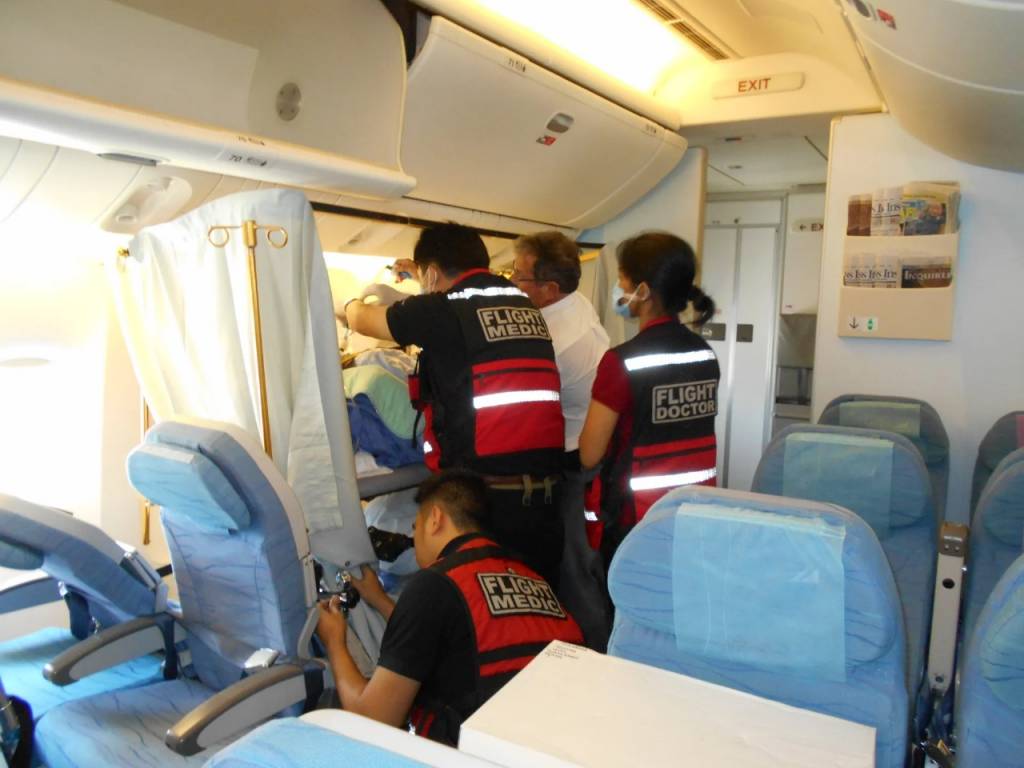
International air travel for people living with Huntington’s disease may require careful planning, particularly when symptoms affect movement, balance, thinking, communication, or swallowing. Huntington’s disease is a progressive genetic neurological condition that affects the brain and can influence a person’s physical abilities, emotional well-being, and cognitive function. Although some patients may be able to travel by air, others require additional assistance to manage the practical and medical demands of a long-distance journey.
Patients may need to travel internationally to return home after receiving medical care, attend specialist appointments, or reunite with family members. For patients who are medically stable but need help navigating airports and managing travel-related challenges, an international medical escort may provide valuable support during a commercial flight.
The appropriate travel arrangements depend on the patient’s symptoms, mobility, communication needs, cognitive abilities, medication schedule, and overall medical stability. Early preparation involving the treating neurologist, family members, airline, and escort provider can help establish a realistic travel plan.
Understanding Huntington’s Disease and Its Impact on International Travel
Huntington’s disease is an inherited neurological condition caused by a genetic change that affects nerve cells in the brain. Symptoms vary between individuals and generally change as the condition progresses.
Common symptoms may include involuntary movements, difficulty with coordination, changes in balance, difficulties with thinking and planning, emotional changes, and problems with speech or swallowing.
These symptoms can create specific challenges during international travel.
Involuntary movements: Chorea, which involves involuntary movements, may make remaining comfortably seated or completing transfers more difficult.
Balance and mobility problems: Walking through large airports or moving between transport services may require assistance.
Cognitive changes: Difficulties with memory, attention, planning, or decision-making may make unfamiliar environments confusing.
Communication difficulties: Changes in speech may make it harder to communicate needs to airline personnel or airport staff.
Swallowing difficulties: Some patients may need specific arrangements for eating and drinking.
Fatigue: Long journeys, disrupted sleep, and busy airport environments can increase tiredness.
Medication management: Patients may need assistance maintaining their prescribed medication schedule throughout the journey.
Emotional or behavioural changes: Stress, unfamiliar surroundings, and changes in routine may be challenging for some individuals.
Not every patient experiences all these symptoms. Some people remain relatively independent for a period, while others require substantial assistance with daily activities.
Travel planning should therefore be based on the individual’s current abilities and care requirements rather than the diagnosis alone.
Why Medical Escort Support May Be Beneficial
Some people with Huntington’s disease can travel independently or with family assistance. Others may benefit from a medical escort because of movement difficulties, cognitive changes, communication needs, or the demands of a complex international itinerary.
Depending on the agreed service and the escort’s professional qualifications, assistance may include:
Supporting the patient through check-in, security procedures, and boarding.
Coordinating wheelchair assistance where appropriate.
Helping the patient navigate unfamiliar airport environments.
Supporting prescribed medication routines according to the agreed care plan.
Communicating the patient’s practical needs to relevant travel personnel.
Helping coordinate meals, rest, and comfort arrangements.
Assisting with transfers within the escort’s training and the agreed service.
Coordinating arrival arrangements with family members or caregivers.
A medical escort may help reduce the practical demands placed on patients and families. However, an escort cannot stop the progression of Huntington’s disease or replace specialist medical care.
Patients with severe swallowing problems, unstable medical conditions, significant behavioural concerns, or care needs that exceed the escort’s professional scope may require further assessment or a different transport arrangement.
7 Essential Tips for Preparing a Patient with Huntington’s Disease for International Travel
1. Obtain Medical Advice Before Booking
Before confirming flights, consult the patient’s treating neurologist or relevant healthcare professional.
The assessment should consider:
Current symptoms and disease progression.
Ability to sit comfortably during the flight.
Mobility, balance, and transfer requirements.
Cognitive and communication abilities.
Swallowing difficulties, if present.
Current medication and treatment needs.
Other medical conditions.
The expected duration of travel and any connecting flights.
The treating clinician should determine whether the patient is medically fit to fly and whether additional precautions are necessary.
If the patient has recently experienced a significant deterioration, repeated falls, serious swallowing difficulties, or another acute medical problem, further assessment may be needed before travel is considered.
2. Arrange Appropriate Airport and Mobility Assistance
International airports can involve long walking distances, crowded terminals, queues, and multiple transfers.
For patients with Huntington’s disease, these demands may increase fatigue and the risk of falls.
Families should consider requesting wheelchair assistance in advance if the patient has difficulty walking long distances or maintaining balance. Even patients who can walk independently at home may find large airports physically demanding.
Before departure, discuss the following requirements with the escort provider and airline where relevant:
Wheelchair assistance.
Support with boarding and disembarking.
Assistance moving between a wheelchair and aircraft seat.
Use of walking aids.
Seating and positioning needs.
Assistance with luggage and personal belongings.
Transfers should be planned carefully, especially if the patient experiences involuntary movements or has difficulty following movement instructions.
Do not assume that an ordinary wheelchair service provides all the assistance a patient may require. Explain the patient’s specific needs before travel arrangements are finalised.
3. Organise Medication and Medical Documentation
Patients with Huntington’s disease may take medication to help manage movement symptoms, mood changes, sleep difficulties, or other associated symptoms.
Before departure, prepare an organised travel folder containing:
A recent medical summary.
An updated list of prescribed medications and doses.
Information about allergies and other medical conditions.
Prescriptions or supporting documentation for medicines, where appropriate.
Treating clinician contact details.
Emergency contact information.
Any required medical fitness-to-fly documentation.
Carry essential medication in hand luggage where permitted, and check the airline’s requirements and the destination country’s rules for bringing prescription medicines into the country.
Discuss medication timing with the treating clinician, particularly when travelling across time zones. Do not stop, change, or adjust prescribed medication without professional advice.
Families should also ensure that the escort provider understands any important medication-related instructions within the agreed scope of care.
4. Prepare for Cognitive and Communication Changes
Huntington’s disease can affect memory, attention, planning, and communication. Busy terminals and unfamiliar travel procedures may make it harder for some patients to understand instructions or express their needs.
Families can help by preparing a simple, structured travel plan.
Consider the following steps:
Explain the journey in clear, reassuring language.
Keep essential travel documents organised and accessible.
Provide written information about important needs.
Avoid unnecessarily complicated routes and tight connections.
Allow extra time for check-in, boarding, and transfers.
Ensure the patient remains accompanied if they cannot navigate unfamiliar environments safely.
Share relevant communication preferences with the escort provider.
Where appropriate, prepare a short information sheet containing the patient’s name, emergency contacts, relevant medical information, communication needs, and any important care instructions.
The information should be handled respectfully and shared only with people who need it to support the journey.
5. Consider Swallowing and Meal Arrangements
Some people with Huntington’s disease develop swallowing difficulties, known as dysphagia. These difficulties can increase the risk of choking or food and liquid entering the airway.
If the patient has swallowing problems, discuss air travel with the treating clinician before booking.
Depending on the patient’s needs, a speech and language therapist or other relevant specialist may provide advice about safe eating and drinking.
Families should clarify:
Whether the patient can safely eat and drink during the flight.
Whether modified food or liquid consistency is required.
Whether assistance with meals is necessary.
Whether the patient needs particular positioning while eating.
What arrangements are needed if the patient cannot safely consume standard airline meals.
Do not assume that a medical escort can independently assess or manage swallowing problems. Any specialised support must be agreed in advance and remain within the escort’s professional qualifications.
Patients with severe or unstable swallowing difficulties may need a higher level of medical assessment before commercial air travel.
6. Plan for Fatigue, Comfort, and Emotional Well-Being
Long-distance travel can be tiring and stressful, particularly for people who experience movement difficulties, cognitive changes, or anxiety in unfamiliar surroundings.
A well-organised itinerary may reduce avoidable demands.
Useful measures include:
Choosing the simplest practical route.
Allowing sufficient time between connecting flights.
Arranging suitable seating and mobility assistance.
Keeping familiar personal items accessible where helpful.
Maintaining a calm and reassuring communication style.
Planning rest before and after the journey.
Confirming that appropriate transport and support will be available after arrival.
Families should consider the patient’s usual routine and identify circumstances that may increase distress or confusion.
The aim is not to eliminate every challenge but to reduce unnecessary stress and provide consistent support throughout the journey.
7. Confirm Support at the Destination
Planning should not end when the aircraft lands. Patients may still need assistance with immigration procedures, baggage collection, ground transport, and transfer to their accommodation or receiving healthcare facility.
Before departure, confirm:
Who will meet the patient at the arrival airport.
Whether wheelchair or mobility assistance is required.
How the patient will travel from the airport to the final destination.
Whether medication and personal care needs can be managed after arrival.
Whether family members or caregivers understand the patient’s current needs.
Whether follow-up appointments or ongoing care have been arranged.
If the patient is returning home after hospital treatment, communicate with the receiving care team where appropriate to ensure continuity of care.
Clear arrival arrangements can help avoid unnecessary confusion and physical strain after a demanding flight.
Managing Comfort and Safety During a Long Flight
The support required during a flight depends on the patient’s symptoms and level of independence. The following considerations may help make the journey more manageable when appropriate.
Maintain the prescribed medication schedule: Follow the treating clinician’s instructions and plan for time-zone changes before departure.
Reduce unnecessary movement demands: Arrange assistance with luggage, boarding, and airport transfers.
Support safe positioning: Consider the patient’s balance, involuntary movements, and comfort when planning seating and transfers.
Follow swallowing recommendations: Patients with dysphagia should follow their healthcare professional’s instructions for food and fluids.
Allow time for rest: Avoid rushing and plan a realistic itinerary that reflects the patient’s stamina.
Communicate changing needs: Ensure the escort knows how the patient typically communicates discomfort or distress.
Keep essential items accessible: Medical documents, medication, emergency contacts, and personal care items should be easy to reach.
If the patient’s condition changes significantly during travel, appropriate medical assistance should be sought. A commercial-flight medical escort cannot provide the same environment or capabilities as a hospital or specialist medical transport service.
What Families Should Consider Before Booking
Before arranging international travel for a person with Huntington’s disease, families should consider the following questions:
Has the treating clinician assessed whether the patient is fit to fly?
Can the patient sit safely and comfortably for the expected journey?
Does the patient need wheelchair assistance or support with transfers?
Are involuntary movements likely to affect seating or mobility?
Does the patient need assistance understanding instructions or communicating?
Are swallowing difficulties or special meal arrangements present?
Are medication schedules and documentation organised?
Can the patient manage the demands of connecting flights?
Is appropriate support available at the destination?
Would a medical escort be suitable, or is a higher level of medical care required?
Discussing these questions in advance can help families make informed decisions and avoid arrangements that do not match the patient’s needs.
When Should Travel Be Postponed?
Travel may need to be postponed if the patient has an acute medical problem, significant new symptoms, unstable swallowing difficulties, or another condition that makes commercial air travel unsafe.
A sudden change in alertness, new severe weakness, serious breathing difficulties, repeated choking, or a sudden neurological change requires prompt medical assessment.
Patients whose symptoms have deteriorated substantially or who require continuous specialist monitoring may need additional evaluation and a different transport arrangement.
The treating clinician should determine whether the patient is fit to fly. A medical escort can provide assistance during an appropriate journey but cannot make an unstable patient medically suitable for commercial air travel.
How MedEscort International Can Help
MedEscort International supports patients and families who need assistance coordinating international medical travel. For suitable patients living with Huntington’s disease, a medical escort may help manage the practical demands of an international journey and provide assistance according to the patient’s needs and the agreed service.
Support may include:
Discussing the patient’s medical and travel requirements with family members.
Coordinating airport assistance and boarding arrangements.
Helping organise relevant medical documentation.
Planning around mobility, comfort, and medication routines.
Communicating practical support requirements to relevant parties.
Coordinating arrival arrangements with the receiving caregiver.
Providing escort assistance within the agreed professional scope.
Every case requires individual assessment. Suitability depends on the patient’s medical stability, cognitive and mobility needs, swallowing concerns, medication requirements, airline policies, and the proposed route.
Contact MedEscort International
Phone: +91 9774900430
Website: medescortinternational.com
Contact MedEscort International to discuss the patient’s circumstances and explore suitable international travel arrangements.
Frequently Asked Questions
1. Can a person with Huntington’s disease travel internationally by plane?
Some people with Huntington’s disease can travel by plane when their condition is stable and appropriate support is available. Suitability depends on mobility, cognitive function, swallowing ability, medication needs, and the treating clinician’s assessment.
2. Is a medical escort necessary for every patient with Huntington’s disease?
No. Some patients can travel independently or with family assistance. Others may benefit from a medical escort because of involuntary movements, mobility limitations, cognitive changes, or difficulty managing a long-distance journey.
3. Can a patient with Huntington’s disease travel if they have difficulty walking?
Some patients with mobility difficulties may be able to travel with appropriate planning, wheelchair assistance, and support with transfers. Their specific needs should be assessed before booking, and any necessary airline arrangements should be confirmed in advance.
4. How should medication be managed during an international flight?
Patients should follow their prescribed medication schedule and consult their treating clinician about time-zone changes. Essential medicines should be carried in hand luggage where permitted, with prescriptions and relevant documentation as needed.
5. What if the patient has swallowing difficulties?
Swallowing difficulties should be assessed before travel. Families should obtain professional advice about safe eating and drinking and confirm whether the patient’s needs can be managed appropriately during the journey. Severe or unstable swallowing problems may require a different travel arrangement.
6. What documents should families prepare?
Families should generally carry a recent medical summary, medication list, allergy information, emergency contacts, relevant specialist recommendations, and any medical fitness-to-fly documents required by the airline or treating clinician.
7. Can MedEscort International assist with medical repatriation for patients with Huntington’s disease?
MedEscort International can discuss the patient’s condition and proposed route to determine whether its medical escort service may be suitable. Arrangements depend on medical stability, mobility, cognitive and communication needs, airline policies, and the level of care required.
Final Thoughts
International travel with Huntington’s disease requires careful planning around mobility, involuntary movements, cognitive changes, medication routines, communication, and any swallowing difficulties. Consulting the treating clinician, arranging appropriate airport assistance, preparing medical documentation, and confirming support at the destination can help families make informed decisions.
For patients who are medically stable but need additional assistance, an international medical escort may help make a long-distance journey more manageable. The priority is to select travel arrangements that reflect the patient’s current condition, preserve dignity, and provide appropriate support throughout the journey.
Medical disclaimer: This article is intended for general informational purposes only and does not replace professional medical advice, diagnosis, or treatment. Patients with Huntington’s disease should consult their treating healthcare professional before making international travel arrangements.