


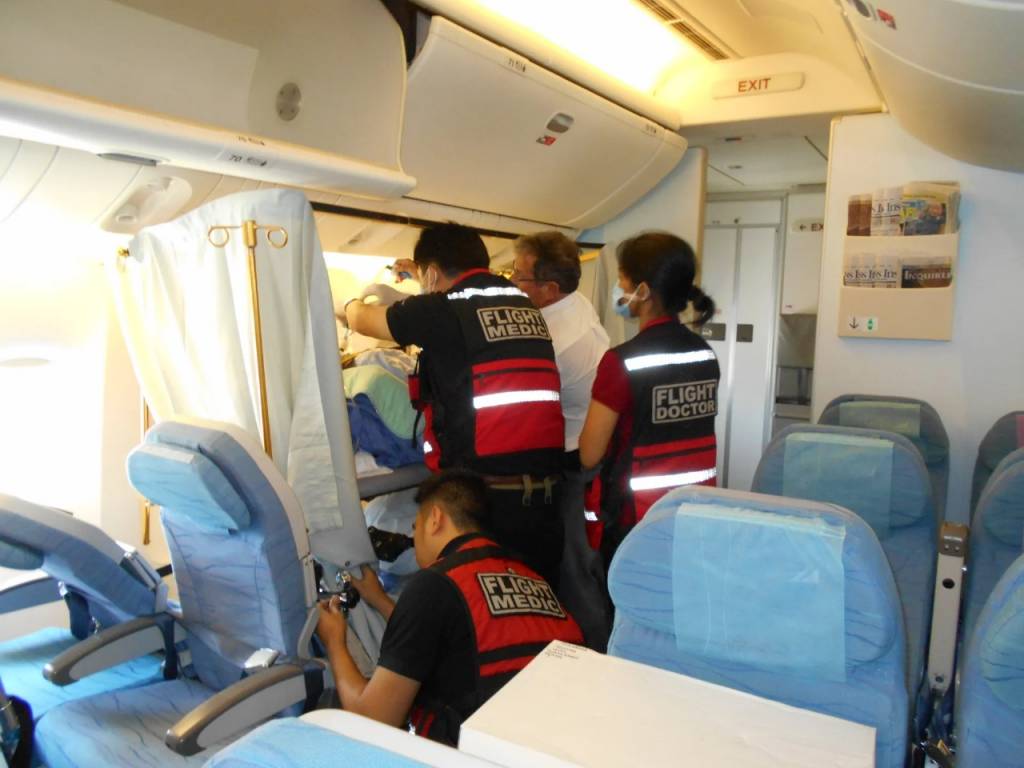
Travelling by aeroplane can be challenging for people who have medical conditions, reduced mobility or ongoing healthcare requirements. Long flight durations, airport procedures, limited movement and changes in the travel environment may create additional difficulties for some passengers.
For patients who are medically suitable for commercial air travel but cannot comfortably travel alone, a medical escort may provide additional support throughout the journey.
But what exactly does a medical escort do during a flight? Does the escort monitor the patient, manage medication, assist with mobility or communicate with airline staff?
Understanding these responsibilities helps families know what to expect when arranging international medical travel.
What Is a Medical Escort on a Flight?
A medical escort is a qualified healthcare professional or appropriately trained medical travel professional who accompanies a patient during transportation.
In international travel, the patient generally travels on a commercial passenger aircraft, subject to medical suitability and airline approval.
The escort provides agreed assistance based on the patient’s medical condition, professional qualifications and service arrangements.
The purpose is to support the patient during the journey while coordinating relevant travel and care requirements.
8 Important Responsibilities of a Medical Escort During a Flight
1. Supporting the Patient Before Boarding
The escort’s responsibilities may begin before the aircraft takes off.
Patients may need assistance completing airport procedures, managing their belongings and preparing for boarding.
Depending on the agreed service, the escort may help with:
Coordinating airport assistance.
Supporting check-in arrangements.
Confirming boarding requirements.
Helping the patient navigate the airport.
Coordinating wheelchair assistance.
Keeping essential medical documents accessible.
Communicating relevant requirements to airline staff.
Advance preparation helps reduce confusion and makes it easier to organise the patient’s journey.
2. Helping the Patient Settle Into Their Seat
Some patients experience discomfort when sitting for extended periods.
Patients recovering from surgery, living with mobility limitations or experiencing chronic pain may require additional attention to seating arrangements.
A medical escort may assist with agreed arrangements such as:
Helping the patient reach their assigned seat.
Organising permitted personal belongings.
Keeping essential supplies accessible.
Supporting comfortable positioning within airline seating limitations.
Coordinating any previously approved seating assistance.
The patient must be able to meet the aircraft’s seating and safety requirements. A commercial airline seat is not a substitute for a medical stretcher.
3. Coordinating Medication Arrangements
Some patients need prescribed medication at specific times during their journey.
A medical escort may help coordinate the agreed medication schedule, depending on their professional qualifications and responsibilities.
This may involve:
Reviewing the medication list.
Keeping prescribed medicines accessible.
Following the agreed medication schedule.
Coordinating medication administration when within professional scope.
Keeping relevant prescriptions and medical documents available.
Families should provide clear medication instructions before departure.
Medication should remain in its original packaging where possible, and any special storage requirements should be discussed in advance.
The escort’s responsibilities for medication must be clearly established before the journey.
4. Observing the Patient’s Condition
Patients with certain medical conditions may need observation during travel.
Depending on the escort’s professional qualifications and the agreed service, this may include observing the patient’s general condition and identifying changes that require attention.
The agreed responsibilities may involve:
Observing general comfort and wellbeing.
Noticing changes in the patient’s reported symptoms.
Following an agreed monitoring plan.
Communicating concerns to the appropriate airline personnel.
Seeking assistance if the patient’s condition deteriorates.
The level of clinical monitoring varies according to the escort’s qualifications and the patient’s requirements.
A standard medical escort service does not automatically provide continuous specialist monitoring, intensive care or advanced life support.
5. Assisting With Mobility and Personal Support
Some patients may have difficulty moving independently during a flight.
This can be particularly challenging for older adults, people recovering from surgery and patients with neurological or musculoskeletal conditions.
Within the agreed service and airline safety rules, an escort may assist with:
Helping the patient organise personal belongings.
Coordinating permitted mobility assistance.
Supporting transfers when appropriate.
Helping the patient communicate personal assistance needs.
Coordinating access to available airport or airline facilities.
Not every patient can safely walk to the aircraft toilet or transfer independently. Families should discuss these requirements before booking.
Airline crew responsibilities and cabin safety procedures must always be respected.
6. Supporting Comfort During Long-Haul Flights
Long international flights may be tiring, particularly for patients who experience pain, fatigue, anxiety or mobility difficulties.
Depending on the patient’s condition and medical advice, the escort may help coordinate practical comfort arrangements.
These may include:
Keeping essential supplies within reach.
Helping organise personal items.
Supporting the agreed movement plan.
Coordinating access to permitted refreshments.
Helping the patient communicate discomfort.
Informing cabin crew when assistance is needed.
Patients should follow their treating clinician’s advice regarding movement, hydration, meals and other travel precautions.
7. Communicating With Family Members
Families often feel anxious when a loved one travels internationally for medical reasons.
Communication arrangements can help families understand how the journey is progressing.
Depending on the agreed service, a medical escort may:
Share relevant travel updates.
Inform family members about arrival progress.
Communicate significant travel-related concerns.
Coordinate information with the receiving party.
Help organise the agreed arrival handover.
Communication should respect patient consent and privacy requirements.
8. Coordinating Arrival and Handover
The medical escort’s responsibilities may continue after the aircraft lands.
Some patients need assistance navigating the arrival airport, collecting permitted belongings or meeting their receiving party.
Depending on the service agreement, arrival support may include:
Assisting with disembarking.
Coordinating wheelchair arrangements.
Supporting airport navigation.
Communicating arrival details to family members.
Coordinating agreed ground transportation.
Arranging a handover to a receiving healthcare professional when required.
A clear arrival plan is particularly important when the patient is travelling to another hospital or medical facility.
What a Medical Escort Cannot Automatically Do
Families should understand that a medical escort service has limitations.
A medical escort is not the same as an air ambulance medical team.
Depending on their qualifications and agreed responsibilities, an escort may provide certain medical or practical assistance. However, the service does not automatically include:
Intensive care during the flight.
Advanced life-support services.
Hospital-level treatment.
Specialist medical procedures.
Continuous specialist monitoring.
Emergency medical equipment beyond the agreed arrangements.
If a patient requires these services, specialist transportation such as an air ambulance may need to be considered.
The patient’s treating medical team should assess fitness to fly and determine the appropriate level of support.
Does a Medical Escort Sit Next to the Patient?
Where seating arrangements permit, a medical escort may sit next to the patient or in a nearby seat.
The exact arrangement depends on:
Seat availability.
Airline policies.
Patient mobility.
Medical requirements.
Aircraft configuration.
The agreed service.
Families should confirm seating arrangements before travel rather than assuming adjacent seats will automatically be available.
What Should Patients Prepare Before a Flight?
Good preparation helps the escort understand the patient’s requirements and coordinate the journey.
Before departure, families should prepare:
Medical documents
Recent medical reports.
Discharge summaries, if applicable.
Current medication list.
Treating doctor’s recommendations.
Relevant prescriptions.
Travel documents
Passport.
Visa, where required.
Flight itinerary.
Airline medical forms, if applicable.
Emergency contact information.
Medical supplies
Prescribed medication.
Approved medical equipment.
Personal hygiene supplies.
Other essential items permitted by the airline.
Patients who require oxygen or other medical equipment should confirm airline approval and equipment arrangements well in advance.
How MedEscort International Supports Patients During Flights
MedEscort International supports patients and families arranging international medical travel.
For eligible patients travelling on commercial flights, the service can be planned around their individual medical and travel requirements.
Depending on the patient’s condition, escort qualifications and agreed service, assistance may include:
Pre-travel coordination.
Airport navigation and boarding support.
Coordination of agreed medication arrangements.
Assistance with permitted medical supplies.
Patient support during the flight.
Communication with family members.
Arrival coordination and agreed handover arrangements.
Every journey requires individual assessment. Medical stability, treating clinician recommendations, escort qualifications, airline approval and route requirements must be considered before travel.
Arrange a Medical Escort for Your International Flight
If a family member needs additional assistance during an international flight, MedEscort International can discuss the proposed journey and support requirements.
Phone: +91 9774900430
Email: alan@medescortinternational.com
Website: medescortinternational.com
Frequently Asked Questions
1. What does a medical escort do during a flight?
A medical escort accompanies a patient and provides agreed medical or practical assistance. Responsibilities may include medication coordination, patient observation, mobility support and communication with family members.
2. Does a medical escort sit next to the patient?
Where seating availability and airline policies permit, the escort may sit next to the patient or in a nearby seat. Arrangements should be confirmed before departure.
3. Can a medical escort administer medication during a flight?
This depends on the escort’s professional qualifications, the medication involved and the agreed responsibilities. Medication arrangements should be established before travel.
4. Does a medical escort monitor vital signs?
Some escorts may provide monitoring within their professional qualifications and the agreed service. However, continuous specialist monitoring is not automatically included in every medical escort arrangement.
5. Can a medical escort help elderly passengers?
Yes. Eligible elderly patients may receive assistance with airport navigation, boarding, mobility arrangements and other agreed travel requirements.
6. Can a medical escort help a patient use the aircraft toilet?
Assistance depends on the patient’s mobility, the escort’s agreed responsibilities, available facilities and airline safety rules. Patients who require extensive personal care should discuss this before booking.
7. Is a medical escort the same as an air ambulance?
No. A medical escort accompanies a patient on a commercial flight, while an air ambulance uses a dedicated medical aircraft for specialist patient transportation.
Final Thoughts
A medical escort can play an important role in supporting eligible patients during international commercial flights.
From airport preparation and medication coordination to patient assistance and arrival arrangements, the escort’s responsibilities are planned around the individual’s requirements.
However, the level of support must be clearly established before booking. Families should understand the escort’s qualifications, service limitations and the airline’s requirements.
Most importantly, the patient’s treating clinician must confirm fitness to fly and determine whether commercial travel with an escort is an appropriate option.
Medical Disclaimer: This article is intended for general informational purposes only and does not replace professional medical advice, diagnosis or treatment. Medical escort responsibilities vary according to qualifications and service agreements. Fitness to fly and the appropriate level of medical transportation must be assessed individually.