


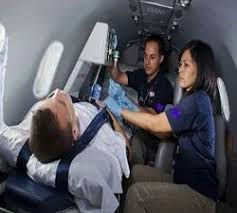
Medical emergencies and patient transfers do not always happen during regular working hours. A patient may need to travel to another country for urgent treatment, return home after hospitalisation or move between healthcare facilities during the night.
This often raises an important question: Can air ambulances fly at night?
Yes, many air ambulance aircraft can operate at night. However, a night medical flight depends on several factors, including aircraft equipment, pilot qualifications, airport facilities, weather conditions, flight permissions and the patient’s medical requirements.
Understanding how night flights are organised can help families make informed decisions when arranging international patient transportation.
Can Air Ambulances Operate at Night?
Many air ambulance operators provide services outside normal daytime hours, including night operations.
However, 24-hour availability does not necessarily mean that every aircraft can depart immediately from every airport. Each journey must meet aviation safety requirements and operational conditions.
Before a night flight is confirmed, the operator may need to assess:
Aircraft and crew availability.
Airport operating hours.
Night-flight permissions and restrictions.
Weather conditions.
Flight route and landing arrangements.
Patient’s medical requirements.
Availability of ground ambulance services.
A flight can proceed only when the necessary aviation and medical arrangements are in place.
7 Important Factors That Affect Night Air Ambulance Flights
1. Aircraft Night-Flight Capability
Not every aircraft has identical operating capabilities.
The selected aircraft must be suitable for the intended route and permitted to operate under the relevant night-flight conditions.
The operator considers the aircraft’s equipment, maintenance status, operational limitations and suitability for the medical configuration.
2. Pilot Qualifications and Crew Availability
Night operations require appropriately qualified flight crew who meet the applicable aviation regulations and operator procedures.
Crew availability also matters. A medical flight may require additional coordination to ensure that pilots, medical personnel and ground teams are available for the planned departure.
Duty-time limitations and rest requirements must be followed. An urgent medical transfer does not remove these aviation safety obligations.
3. Airport Operating Hours and Facilities
Even when an aircraft can fly at night, the departure and arrival airports must be able to support the operation.
Some airports operate around the clock, while others have restricted operating hours.
Important considerations include:
Night operating permissions.
Runway and lighting facilities.
Airport handling services.
Ground support availability.
Customs and immigration arrangements for international flights.
Ambulance access and transfer coordination.
If an airport is unavailable at night, an alternative airport may need to be considered.
4. Weather and Visibility
Weather conditions can affect both daytime and nighttime flights.
Night operations require careful assessment of visibility, cloud conditions, wind, storms and other relevant weather information.
The flight crew and operator must determine whether conditions are suitable for the planned route and airports.
If weather conditions are unsafe, the flight may need to be delayed, rerouted or scheduled through an alternative airport.
5. Medical Team and Equipment Arrangements
An air ambulance requires a medical team and equipment appropriate to the patient’s condition.
Depending on the agreed care plan, arrangements may include:
Patient monitoring equipment.
Oxygen delivery systems.
Respiratory support equipment.
Medical supplies.
Stretcher and patient-support systems.
Qualified medical personnel.
The medical team must be available and the aircraft must be appropriately configured before departure.
6. International Flight Permissions
International night flights may involve additional coordination between aviation authorities and airports.
Depending on the route, the operator may need:
Overflight permissions.
Landing permits.
Airport handling confirmation.
Customs and immigration coordination.
Medical transport documentation.
Approval for the intended operating schedule.
The requirements vary between countries and airports. These arrangements can influence how quickly a medical flight can be organised.
7. Ground Ambulance Availability
The patient’s journey does not end when the aircraft lands.
Ground ambulance transportation may be required to transfer the patient between the hospital and airport at both ends of the journey.
For a night transfer, families should confirm that suitable ground transportation is available at the required times.
This is particularly important when the patient needs a stretcher, wheelchair-accessible transport or medical support during the road journey.
Is a Night Air Ambulance Available 24/7?
Some air ambulance providers coordinate services around the clock. However, actual departure times depend on aircraft, crew, medical and airport availability.
A provider may receive an enquiry at any hour, but the time required to organise a flight depends on the patient’s condition and the operational requirements.
A 24-hour enquiry service should not be confused with a guarantee of immediate aircraft departure.
Are Night Air Ambulance Flights Safe?
Night flights are a recognised part of aviation operations. Their safety depends on compliance with applicable aviation regulations, aircraft suitability, qualified crew, weather assessment and appropriate airport facilities.
For medical flights, the operator must also ensure that the aircraft and medical team can support the patient’s agreed care requirements.
Families should ask the provider about:
The aircraft proposed for the journey.
The medical team assigned.
The departure and arrival airports.
The expected route and any planned stops.
Ground ambulance arrangements.
Any operational restrictions affecting the schedule.
No flight should proceed if the required safety conditions are not met.
What Happens If a Patient Needs Urgent Night-Time Medical Transport?
When a patient needs urgent transportation, the first step is to obtain relevant medical information and establish the patient’s current condition.
The planning process may involve:
Receiving the patient’s medical details.
Coordinating with the treating hospital.
Assessing the appropriate transport option.
Checking aircraft and medical team availability.
Confirming airport and flight permissions.
Arranging ground ambulance transfers.
Coordinating the departure and arrival handovers.
The treating clinician must assess the patient’s medical requirements. The transport provider then evaluates whether the proposed journey can be arranged safely and operationally.
Air Ambulance vs Medical Escort on a Night Flight
An air ambulance is not the only possible option for a patient who needs to travel at night.
Some patients may be suitable for a scheduled commercial flight accompanied by a qualified medical escort.
| Feature | Air Ambulance | Medical Escort on Commercial Flight |
|---|---|---|
| Aircraft | Dedicated medical aircraft | Scheduled commercial aircraft |
| Schedule | Planned around the medical transfer | Depends on available airline services |
| Medical support | Configured according to the patient’s transport care plan | Provided by the escort within their professional scope |
| Patient suitability | May support patients requiring specialised medical transport | Requires suitability for commercial air travel |
| Night availability | Depends on aircraft, crew and airport operations | Depends on airline schedules and approval |
| Cost | Generally higher | May be more economical for suitable patients |
A commercial flight with a medical escort is not a replacement for an air ambulance when the patient requires dedicated medical transportation or a higher level of support.
What Should Families Confirm Before a Night Medical Flight?
Before confirming the journey, families should clarify the following details:
Is the departure airport open and available at night?
Is the arrival airport able to receive the aircraft?
Are the required flight permissions in place?
Is the medical team confirmed?
Is the aircraft configured for the patient’s needs?
Are ground ambulance transfers arranged?
Is the receiving hospital prepared for the patient’s arrival?
What is the expected door-to-door journey time?
Having these details confirmed can help families understand the arrangements and prepare for the transfer.
Frequently Asked Questions
1. Can an air ambulance fly at midnight?
Yes. Some air ambulance operations can take place at midnight, provided the aircraft, crew, airports, permissions and weather conditions allow the flight.
2. Do air ambulances operate 24 hours a day?
Some providers coordinate services around the clock. However, aircraft departure depends on availability, medical assessment, flight permissions and operational conditions.
3. Are night air ambulance flights more expensive?
They may involve additional operational expenses depending on airport handling, crew arrangements and other requirements. The cost varies according to the specific journey.
4. Can an air ambulance land at any airport at night?
No. The airport must be suitable and authorised for the planned operation. Operating hours, runway facilities, lighting and ground services may affect the choice of airport.
5. Can a medical escort accompany a patient on a night flight?
Yes, if a suitable commercial flight is available and the patient meets medical and airline requirements. The medical escort can provide agreed support within their professional scope.
6. What happens if bad weather delays a night medical flight?
The operator may delay departure, change the route or consider an alternative airport. The decision depends on aviation safety requirements and operational conditions.
7. Can family members accompany a patient on a night air ambulance?
Some aircraft may have space for a family member, depending on aircraft capacity, medical equipment and operational arrangements. This must be confirmed before departure.
8. How quickly can a night air ambulance be arranged?
There is no fixed timeframe. It depends on the patient’s medical condition, aircraft and crew availability, airport access, flight permissions and ground transportation arrangements.
Need Medical Assistance for International Travel?
Planning a medical journey outside regular hours can involve additional coordination. Patients and families need to understand the available transport options and the support required throughout the journey.
MedEscort International helps patients and families explore international medical escort arrangements for eligible patients travelling on commercial flights.
If your loved one needs professional assistance during international travel, contact our team to discuss the patient’s requirements and available arrangements.
Phone: +91 9774900430
Email: alan@medescortinternational.com
Website: MedEscort International
Contact MedEscort International to discuss suitable medical travel arrangements for your loved one.