


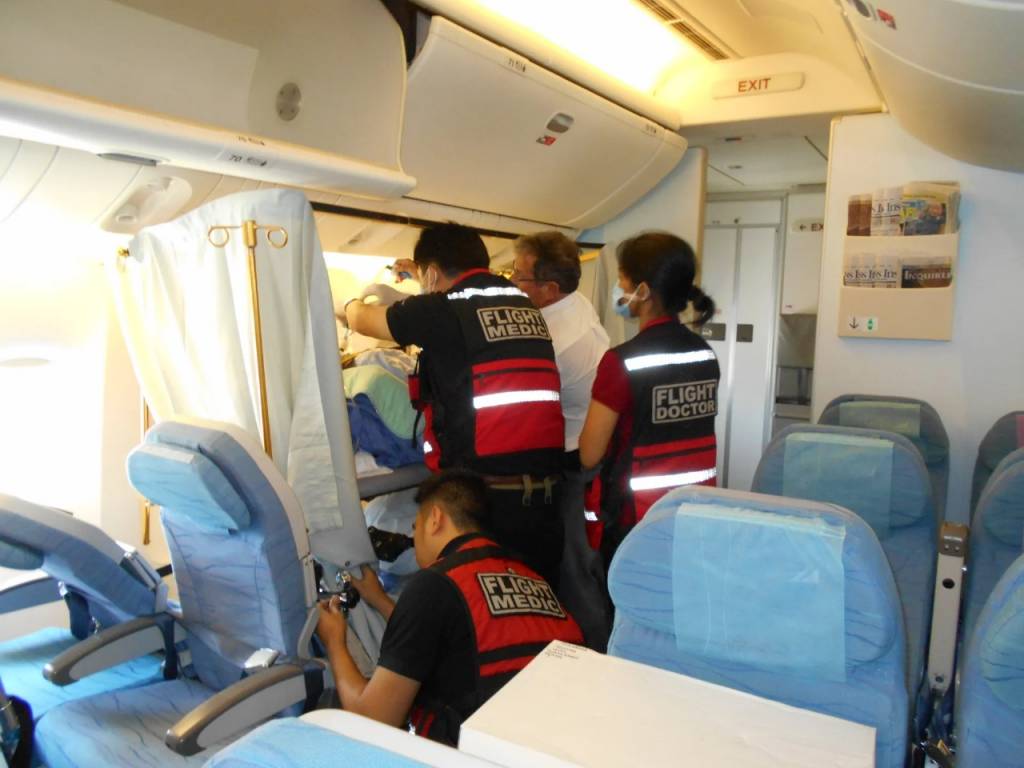
When a patient needs to travel a long distance for medical treatment, return home after hospitalisation abroad or move to another healthcare facility, choosing the right transportation is important. For some patients, ordinary commercial travel may not provide the level of medical support required.
In these situations, an air ambulance may be considered. It is a dedicated aircraft arranged for medical transportation, with equipment and personnel selected according to the patient’s clinical requirements.
But when is an air ambulance actually necessary? Does every patient who is seriously ill need one? And when might a commercial flight with a medical escort be a suitable alternative?
This guide explains eight situations in which specialised air ambulance transportation may be considered.
What Is an Air Ambulance?
An air ambulance is an aircraft used to transport patients who require medical support during a journey.
Depending on the patient’s condition and the agreed transport plan, an air ambulance may include:
A medical team appropriate to the patient’s needs.
Patient monitoring equipment.
Oxygen and respiratory support equipment where required.
A stretcher and patient-support systems.
Medical supplies.
Coordination with departure and receiving hospitals.
Ground ambulance transfers.
The aircraft and medical team are selected according to the patient’s clinical requirements, route and operational conditions.
An air ambulance is different from a commercial flight with a medical escort. A dedicated medical aircraft may be considered when the patient’s needs cannot be appropriately accommodated on a scheduled airline.
8 Situations Where an Air Ambulance May Be Necessary
1. When a Patient Requires Continuous Medical Monitoring
Some patients may need close medical observation throughout their journey.
Their condition may require regular or continuous monitoring by appropriately qualified medical personnel using suitable equipment.
Examples may include patients with:
Complex medical conditions.
Unstable vital signs.
A significant risk of deterioration.
Medical requirements that cannot be managed appropriately on a commercial flight.
The treating medical team must assess whether the patient can travel and determine the level of support required.
When dedicated monitoring and medical arrangements are necessary, an air ambulance may be considered.
2. When a Patient Needs Advanced Respiratory Support
Patients with significant breathing difficulties may require specialised respiratory support during transportation.
Depending on the clinical assessment, this could involve oxygen therapy or more advanced respiratory equipment.
A dedicated medical aircraft may be appropriate when the patient’s respiratory needs cannot be safely accommodated through commercial airline arrangements.
The required equipment, medical personnel and aircraft configuration must be assessed before the journey.
3. When a Patient Is Unable to Sit Upright
Commercial airlines generally have specific seating and passenger requirements. Some patients may be unable to remain seated for the duration of a flight because of their medical condition or physical limitations.
An air ambulance may be considered when the patient requires stretcher transportation and cannot meet the airline’s normal seating requirements.
Possible circumstances include:
Severe mobility limitations.
Certain complex injuries.
Conditions requiring a horizontal transport position.
Medical situations where sitting upright is not appropriate.
A stretcher arrangement must be planned according to the patient’s condition and the aircraft’s capabilities.
4. When a Patient Requires Specialised Medical Equipment
Some patients need equipment that cannot be accommodated or approved for use on an ordinary commercial flight.
Depending on the care plan, requirements may include:
Advanced patient monitoring systems.
Respiratory support equipment.
Infusion equipment.
Specialised medical supplies.
Patient-support systems.
The equipment must be suitable for the aircraft and the planned journey.
If the patient’s medical needs require a dedicated aircraft configuration, an air ambulance may be an appropriate option.
5. When a Patient Needs an International Hospital-to-Hospital Transfer
A patient may need to move from one hospital to another in a different city or country.
This can happen when:
A specialist treatment facility is required.
The patient needs access to a particular medical department.
The current hospital cannot provide the required treatment.
The patient needs to return to their home country for continued care.
International hospital-to-hospital transfers require coordination between medical teams, transport providers and receiving facilities.
An air ambulance may be considered when the patient’s medical condition or transport requirements make ordinary travel unsuitable.
6. When a Patient Needs Medical Repatriation
Medical repatriation refers to arranging a patient’s return to their home country after illness, injury or hospitalisation abroad.
For example, someone who becomes seriously ill while travelling internationally may need transportation home once their treating doctors determine that transfer is appropriate.
An air ambulance may be considered if the patient requires dedicated medical transportation or support that cannot be appropriately provided on a commercial flight.
The decision depends on:
Current medical stability.
Required medical support during travel.
Distance and route.
Availability of suitable aircraft.
Acceptance by the receiving hospital.
Medical and aviation approvals.
Not every patient returning home after hospitalisation requires an air ambulance. Some may be suitable for a commercial flight with an appropriate medical escort.
7. When Ground Transportation Is Not Practical
In some situations, long-distance road transportation may not be suitable for the patient’s condition.
This may be due to:
Significant travel distance.
The patient’s need for medical monitoring.
Physical discomfort associated with a long road journey.
Limited access to suitable road transport.
Geographical or logistical challenges.
An air ambulance may reduce the amount of time spent travelling by road, depending on airport access and the planned route.
However, ground ambulance transportation is often still needed to move the patient between the hospital and airport.
8. When a Patient Requires a Dedicated Medical Transport Arrangement
Some patients have several medical and logistical requirements that need to be coordinated together.
For example, a patient may need a stretcher, specialised equipment, a medical team and direct coordination between two hospitals.
A dedicated air ambulance arrangement may allow these requirements to be planned around the patient’s transport needs.
The decision should always be based on an individual medical assessment rather than the patient’s diagnosis alone.
Does Every Seriously Ill Patient Need an Air Ambulance?
No. A serious diagnosis does not automatically mean that a patient requires a dedicated medical aircraft.
The appropriate transport method depends on the patient’s current condition and the support needed during travel.
Some patients may be medically suitable for a scheduled commercial flight with a qualified medical escort. Others may require a dedicated air ambulance.
The following comparison provides a general overview.
| Requirement | Air Ambulance | Medical Escort on Commercial Flight |
|---|---|---|
| Aircraft | Dedicated medical aircraft | Scheduled airline |
| Patient position | May accommodate stretcher transport | Usually standard seating, subject to approved arrangements |
| Medical support | Configured according to the transport care plan | Provided by the accompanying professional within their scope |
| Equipment | May accommodate specialised medical equipment | Subject to airline approval and limitations |
| Patient suitability | May support patients requiring dedicated medical transport | Requires individual assessment for commercial air travel |
| Scheduling | Arranged around the medical transfer | Depends on airline schedules and availability |
| Cost | Generally higher | May be more economical for suitable patients |
A medical escort is not a substitute for an air ambulance when the patient requires dedicated medical transportation or a level of care that cannot be provided on a commercial flight.
Who Decides Whether a Patient Needs an Air Ambulance?
The decision should involve the patient’s treating medical team and the medical transport provider.
The treating clinician assesses the patient’s condition, fitness to travel and medical requirements.
The transport provider then considers whether the proposed aircraft, medical team and operational arrangements can meet those requirements.
Important factors include:
The patient’s current medical condition.
Whether the patient is stable enough to travel.
Required monitoring and medical support.
Suitable aircraft availability.
Departure and destination airport facilities.
Ground ambulance arrangements.
Receiving hospital acceptance.
The airline or relevant authorities may also need to approve certain arrangements when commercial aviation is being considered.
What Information Is Needed to Arrange an Air Ambulance?
Families can help the initial assessment by preparing relevant patient and travel information.
| Information | What to Provide |
|---|---|
| Patient details | Age and basic identification information |
| Medical condition | Diagnosis and current condition |
| Hospital information | Current hospital and treating doctor’s contact details |
| Destination | Receiving hospital and destination city |
| Medical reports | Recent medical summaries and relevant test results |
| Support requirements | Oxygen, monitoring, respiratory support or stretcher needs |
| Travel date | Preferred or required transfer date |
| Family contact | Responsible person’s phone number and email |
The provider may request additional medical documentation before confirming whether an air ambulance is appropriate.
How Is an Air Ambulance Transfer Arranged?
Although the process varies by provider and country, an international medical flight generally involves several stages.
Step 1: Initial Enquiry
The family or hospital contacts the medical transport provider with the patient’s details and proposed destination.
Step 2: Medical Assessment
Relevant medical reports are reviewed, and the treating team may be contacted to understand the patient’s current condition.
Step 3: Transport Planning
The provider considers the appropriate aircraft, medical personnel, equipment and route.
Step 4: Operational Coordination
Aircraft availability, flight permissions, airport arrangements and ground transportation are checked.
Step 5: Hospital Coordination
The departure and receiving hospitals coordinate the patient’s transfer and handover.
Step 6: Patient Transfer
The patient is transported according to the agreed medical and operational plan.
Frequently Asked Questions
1. When is an air ambulance necessary?
An air ambulance may be necessary when a patient requires dedicated medical transportation, stretcher transfer, specialised equipment or medical support that cannot be appropriately accommodated on a commercial flight.
2. Can a patient travel by air ambulance after surgery?
Some patients may be able to travel after surgery, but timing and suitability depend on their recovery, medical stability and the treating surgeon’s assessment. The transport provider must also determine the appropriate arrangements.
3. Is an air ambulance necessary for medical repatriation?
Not always. Some patients can return home on a commercial flight with a medical escort. An air ambulance may be considered when the patient’s medical requirements make dedicated transportation more appropriate.
4. Is an air ambulance only for life-threatening emergencies?
No. Air ambulances may also be arranged for planned hospital transfers, medical repatriation and other situations where a patient requires dedicated medical transportation. The need depends on the patient’s condition and transport requirements.
5. Can an air ambulance transport patients internationally?
Yes. International air ambulance transfers can be arranged subject to aircraft availability, medical suitability, flight permissions and destination requirements.
6. Is a medical escort an alternative to an air ambulance?
For some patients, yes. A medical escort may accompany an eligible patient on a commercial flight and provide agreed support within their professional scope. It is not suitable for everyone.
7. Can family members accompany a patient in an air ambulance?
Some aircraft may have capacity for a family member, but this depends on the aircraft, medical equipment, patient configuration and operational arrangements. It should be confirmed before booking.
8. How do I know which medical transport option is right?
Start by discussing the patient’s fitness to travel and medical requirements with the treating clinician. A medical transport provider can then assess the available options and explain the arrangements that may be suitable.
Discuss International Medical Travel With MedEscort International
Choosing between an air ambulance and a commercial flight with a medical escort can be difficult for families. The most appropriate option depends on the patient’s medical condition, travel requirements and the level of support needed during the journey.
MedEscort International helps patients and families explore international medical escort arrangements for eligible patients travelling on commercial flights.
If your loved one needs assistance travelling between countries, our team can discuss the journey, explain the information required and help you explore suitable medical travel arrangements.
Contact MedEscort International
Phone: +91 9774900430
Email: alan@medescortinternational.com
Website: MedEscort International
Planning an international medical journey? Contact MedEscort International to discuss your loved one’s travel requirements.