


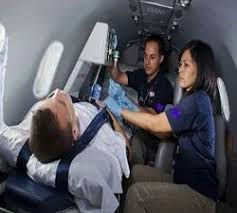
Planning an international flight for someone with a medical condition requires more preparation than booking an ordinary holiday. Patients recovering from surgery, receiving ongoing treatment or travelling after hospitalisation may need medical clearance and supporting documents before an airline approves their journey.
Having the correct paperwork can help airlines understand the patient’s condition, assess their travel requirements and arrange appropriate assistance. It can also help medical escorts and receiving healthcare teams understand the patient’s medical history.
The exact requirements depend on the patient’s condition, destination, airline policy and the type of assistance required. Here are eight important documents to consider before arranging an international medical journey.
1. Medical Fitness-to-Fly Certificate
A medical fitness-to-fly certificate or letter provides information about whether a patient is medically suitable for air travel.
It is generally prepared by the treating doctor after reviewing the patient’s condition.
Depending on the circumstances, it may include:
Patient’s diagnosis and current medical condition.
Recent treatment or surgery details.
Current stability and relevant clinical observations.
Any travel-related limitations.
Special assistance or medical requirements.
The doctor’s assessment of fitness to fly.
A fitness-to-fly letter does not automatically guarantee airline approval. Airlines may have their own medical assessment procedures and documentation requirements.
2. Medical Summary or Clinical Report
A medical summary provides an overview of the patient’s health condition and recent treatment.
This document is particularly useful when a patient is travelling between countries for continued treatment or returning home after hospitalisation.
A medical report may contain:
Diagnosis and relevant medical history.
Details of recent hospitalisation.
Treatment and procedures performed.
Current condition and recovery progress.
Known allergies.
Important clinical observations.
Recommendations for ongoing care.
The report should be recent and sufficiently detailed to support the travel assessment.
3. Hospital Discharge Summary
Patients travelling after hospital discharge should keep a copy of their discharge summary.
This document explains the treatment received during the hospital stay and provides information about the patient’s condition at discharge.
It may include:
Admission and discharge dates.
Reason for hospitalisation.
Diagnosis.
Procedures or surgeries performed.
Medicines prescribed at discharge.
Follow-up appointments.
Instructions for continued treatment.
A discharge summary can help the receiving medical team understand the patient’s recent healthcare journey.
4. Medication List and Prescriptions
Patients who take regular medication should prepare an updated medication list before travelling.
This helps the medical escort, airline personnel where relevant, and receiving healthcare professionals understand the patient’s medication requirements.
The list should ideally include:
| Information | Details to Include |
|---|---|
| Medicine name | Generic or prescribed name |
| Dosage | Prescribed strength |
| Frequency | How often it is taken |
| Administration | How the medicine is taken |
| Purpose | Reason for taking the medication |
| Special instructions | Storage or timing requirements |
Patients should carry medicines in their original packaging where possible and keep prescriptions or supporting documents available.
Some medicines are subject to restrictions in certain countries. Check the regulations of the destination and any transit countries before departure.
5. Airline Medical Information Forms
Some airlines require passengers with particular medical conditions or assistance needs to complete medical information forms.
These forms may be known as MEDIF forms or other airline-specific medical clearance documents.
They help the airline assess whether the passenger can travel safely under its operating conditions and whether special arrangements are necessary.
Depending on the airline, the form may request:
Medical diagnosis.
Current symptoms and stability.
Recent surgery or hospitalisation details.
Oxygen requirements.
Mobility limitations.
Medical equipment requirements.
Details of an accompanying medical professional.
The airline may also request additional reports or clarification from the treating doctor.
Important: Airline medical requirements differ. Contact the airline directly and complete the required forms within its specified timeframe.
6. Oxygen or Medical Equipment Documentation
Some patients may need medical equipment or supplementary oxygen during their journey.
Before travelling, it is important to confirm whether the equipment is permitted and whether the airline can accommodate the patient’s requirements.
Supporting documents may include:
A doctor’s prescription for oxygen.
Details of the required oxygen flow rate.
Medical equipment specifications.
Manufacturer information, where requested.
Battery details for approved portable medical devices.
Airline approval or equipment forms.
Passengers should never assume that they can bring or use any medical device onboard without prior approval.
The treating clinician and airline should confirm the requirements before the flight is booked.
7. Passport, Visa and Travel Authorisation
Medical documents are not the only paperwork needed for international patient transport. Standard travel documents are equally important.
Depending on the route, patients may need:
A valid passport.
Appropriate visa or entry permission.
Transit visa, where applicable.
Travel insurance documents, if required.
Emergency contact details.
Relevant medical travel authorisations.
Families should check the entry requirements of the destination country and every transit country.
Patients travelling for medical treatment may also need additional documents from the receiving hospital or healthcare provider.
8. Emergency Contacts and Receiving Hospital Information
For patients travelling internationally for continued treatment, it is useful to prepare contact details for the people and organisations involved in the journey.
This information can help coordinate communication if travel arrangements change or assistance is required.
Consider preparing:
Treating doctor’s contact information.
Departure hospital details.
Receiving hospital or clinic details.
Family member or legal representative contacts.
Medical escort contact details.
Address of the destination accommodation or care facility.
Details of the planned hospital handover, where applicable.
Keeping these details together in an organised travel folder can make them easier to access when needed.
How to Organise Medical Documents Before Departure
Having all the necessary documents is important, but organising them properly is equally valuable.
Follow these practical steps:
Step 1: Request updated medical records
Contact the treating hospital or doctor for the latest medical summary, discharge report and relevant test results.
Step 2: Confirm fitness to fly
Ask the treating clinician to assess whether the patient is suitable for the proposed journey.
Step 3: Contact the airline
Request the airline’s current medical travel requirements and any forms that need to be completed.
Step 4: Prepare medication information
Create an updated medication list and collect prescriptions or supporting letters.
Step 5: Check medical equipment requirements
Obtain approval for oxygen or other equipment before travelling.
Step 6: Check international travel regulations
Review passport, visa, medication and medical equipment rules for the destination and transit countries.
Step 7: Share relevant information with the medical escort
Where a medical escort is arranged, provide the relevant reports and agreed travel information in advance.
Step 8: Keep copies accessible
Carry important documents in hand luggage and maintain secure digital copies where appropriate.
Why Are Medical Documents Important for a Medical Escort Journey?
A medical escort journey involves more than accompanying a patient on a flight. Appropriate preparation helps everyone involved understand the patient’s needs and the responsibilities agreed for the journey.
Medical documents can help with:
Understanding the patient’s medical history.
Reviewing the patient’s travel suitability.
Identifying medication and mobility requirements.
Communicating relevant information to the airline.
Coordinating airport and transfer arrangements.
Supporting communication with the receiving healthcare team.
The medical escort’s responsibilities depend on their professional qualifications and the agreed service. Medical records should be shared securely and only with appropriate consent.
Frequently Asked Questions
1. Is a fit-to-fly certificate compulsory for every patient?
No. Not every passenger needs a medical certificate. However, airlines may request medical clearance when a passenger has a medical condition, recent surgery or specific assistance requirements.
2. How recent should a medical report be?
There is no single validity period for every situation. The required date depends on the airline, medical condition and circumstances. Ask the airline and treating clinician what documentation is acceptable.
3. Can I travel after surgery with only a discharge summary?
A discharge summary alone may not be sufficient. The treating doctor should assess fitness to fly, and the airline may request additional medical information.
4. Do airlines provide medical forms?
Many airlines have medical information or clearance forms for passengers who need special medical arrangements. Contact the airline to obtain the correct form.
5. Can I carry prescription medicines on an international flight?
Many prescribed medicines can be carried, but requirements vary by destination. Keep medicines properly labelled and carry prescriptions or supporting documents. Check restrictions in the destination and transit countries.
6. Do I need medical documents when travelling with a medical escort?
Relevant medical documents are important for planning and coordinating the journey. The specific documents required depend on the patient’s condition, airline requirements and agreed escort arrangements.
7. Can a medical escort arrange airline medical clearance?
A medical escort provider may help coordinate the documentation process, depending on the agreed service. However, medical fitness decisions must come from an appropriate clinician, and airline approval remains subject to the airline’s requirements.
8. What happens if I do not have the required medical documents?
The airline may request additional information, delay approval or refuse boarding if its requirements are not met. It is best to confirm all documentation before travelling.
Plan Your International Medical Journey With MedEscort International
Preparing medical documents correctly is an important part of arranging international patient travel. From medical reports and discharge summaries to airline forms and medication records, each document can help support a more organised journey.
If you are arranging international travel for a patient who needs additional assistance, MedEscort International can be contacted to discuss international medical escort arrangements and the travel coordination required for the journey.
Discuss the patient’s condition, travel route and support requirements with the team before making final arrangements.
Website: https://medescortinternational.com/
Phone: +91 9774900430
Email: alan@medescortinternational.com
Contact MedEscort International to discuss medical escort arrangements for your next international patient transfer.