


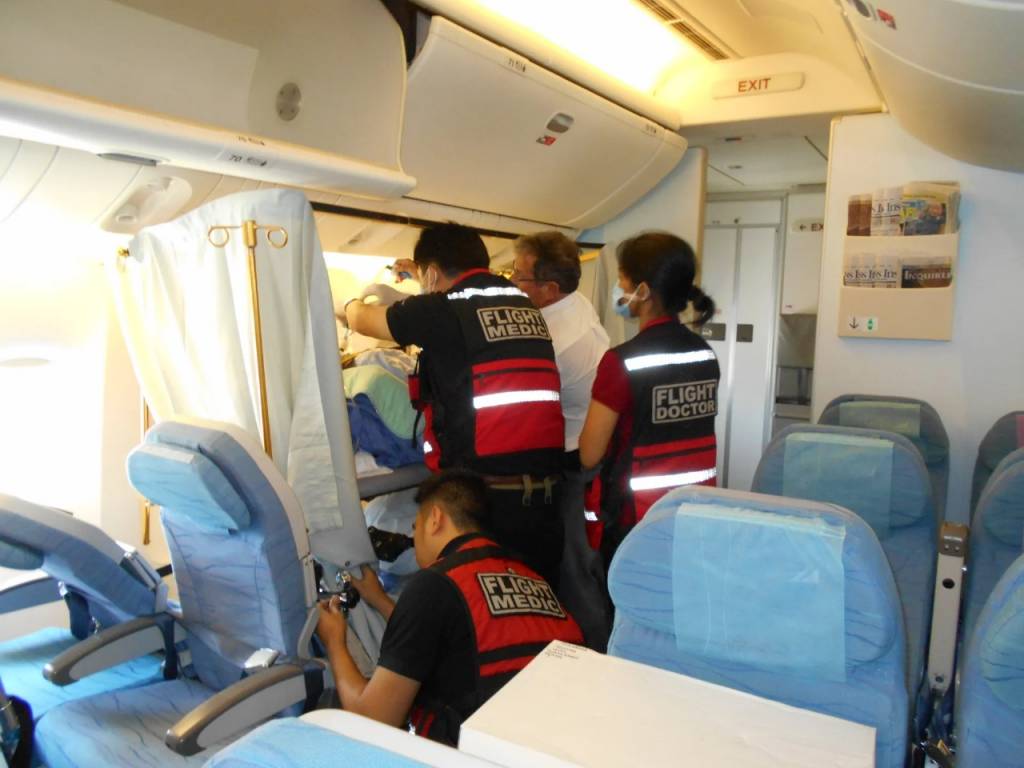
Travelling internationally after a spinal cord injury can involve several practical and medical challenges. Depending on the level and severity of the injury, a patient may require wheelchair assistance, specialised seating arrangements, help with transfers or support with daily care activities. Long-distance journeys also require consideration of pressure management, bladder and bowel routines, medication schedules and access to appropriate facilities. With advance planning and guidance from the treating healthcare team, some patients may be able to travel on commercial flights with suitable assistance. A medical escort may help coordinate agreed support throughout the journey when clinically appropriate.
Can Patients With Spinal Cord Injuries Travel by Commercial Flight?
A spinal cord injury does not automatically prevent someone from flying. However, fitness to travel depends on the patient’s medical stability, injury characteristics, mobility requirements and ability to tolerate the proposed journey. Recent injuries, associated complications, respiratory concerns or other medical conditions may require additional assessment before departure.
The treating doctor should review the patient’s condition and confirm whether commercial air travel is appropriate. The airline may also request medical documentation or clearance, particularly when the passenger needs specialised assistance, medical equipment or specific seating arrangements.
7 Important Considerations Before an International Flight
1. Assess Medical Fitness to Fly
Before making travel arrangements, consult the treating specialist or rehabilitation team. They can assess the patient’s current condition, identify potential travel-related concerns and recommend suitable precautions. Patients recovering from a recent spinal injury may need additional evaluation before undertaking a long-haul journey.
2. Arrange Suitable Wheelchair Assistance
Passengers who use wheelchairs should inform the airline about their mobility requirements well before departure. Airport assistance may be available for check-in, security procedures, boarding and arrival. Families should explain whether the patient can transfer independently or requires physical assistance.
3. Plan Seating and Positioning
Comfortable positioning is important during extended flights. Discuss suitable seating arrangements with the treating healthcare team and airline. Patients who need additional positioning support should have their requirements assessed before booking. Any specialised cushion or positioning equipment should be checked for compatibility with airline rules and the patient’s care plan.
4. Consider Pressure Management
Some patients with spinal cord injuries have reduced sensation and may be at greater risk of developing pressure injuries. The healthcare team can recommend an appropriate pressure-relief plan for the journey. This may include suitable cushions, positioning changes and skin checks, depending on the patient’s needs and ability to move independently.
5. Organise Bladder and Bowel Care
Bladder and bowel routines should be discussed with the treating clinician before travel. Patients may need to plan medication, supplies, catheter-related equipment or access to suitable facilities. The availability of accessible aircraft toilets should be confirmed with the airline rather than assumed.
6. Prepare Medication and Medical Equipment
Carry prescribed medication and essential medical supplies in hand luggage, subject to airline and airport security requirements. Keep medicines in their original packaging where possible and carry prescriptions or a supporting medical letter. If the patient uses medical equipment, confirm its transport, battery and usage requirements with the airline.
7. Coordinate Airport Transfers and Arrival Support
Travel planning should include the journey from the hospital or residence to the departure airport, airport assistance, the flight and onward transportation at the destination. Confirm that suitable vehicles, wheelchair access and receiving support are available after arrival.
How a Medical Escort May Assist During the Journey
A medical escort may provide additional support to a patient with a spinal cord injury, depending on the agreed service, the patient’s clinical needs and the escort’s professional qualifications. Possible areas of assistance include:
- Coordinating travel arrangements with the family and relevant healthcare professionals.
- Supporting agreed mobility and transfer arrangements within professional scope.
- Helping the patient follow the documented medication and care schedule.
- Assisting with communication between the patient, family and travel support teams.
- Monitoring the patient’s general condition during the journey within the agreed care plan.
- Helping coordinate arrival arrangements and handover to the receiving caregiver or healthcare team.
A medical escort on a commercial flight is not equivalent to an air ambulance. It does not automatically provide hospital-level care, intensive care or advanced life support. Patients who require continuous advanced medical intervention may need a different transport arrangement.
Medical Documents and Equipment to Prepare
Before departure, families should discuss the required documentation and equipment with the treating healthcare team. Depending on the patient’s condition, useful preparations may include:
- Recent medical summary and specialist assessment.
- Current medication list and prescriptions.
- Details of mobility and transfer requirements.
- Wheelchair specifications and airline handling instructions.
- Pressure-relief cushion or other approved positioning equipment.
- Catheter supplies or other essential personal care items, if required.
- Medical equipment documentation and airline approval, where applicable.
- Emergency contact details and destination care arrangements.
Frequently Asked Questions
Can a wheelchair user with a spinal cord injury travel on a commercial aircraft?
Some wheelchair users with spinal cord injuries can travel on commercial flights. Suitability depends on their medical condition, transfer requirements, seating needs and airline policies. Medical assessment and advance coordination are important.
Can a patient remain in their wheelchair during the flight?
Most commercial aircraft require passengers to transfer to an approved aircraft seat for take-off, landing and the flight itself. Some airlines may provide onboard aisle wheelchairs for movement within the cabin, but availability and assistance vary. Confirm arrangements directly with the airline.
How can pressure injuries be prevented during a long flight?
Patients should obtain an individual pressure-management plan from their healthcare team. Depending on their condition, this may include appropriate seating support, pressure-relief techniques and skin checks. The plan should account for the patient’s ability to reposition and the limitations of the aircraft environment.
Does every patient with a spinal cord injury need a medical escort?
No. Some patients can travel with family or standard airline assistance. A medical escort may be useful when the patient requires additional clinical or practical support that cannot be adequately managed through ordinary travel assistance.
Plan International Patient Travel With MedEscort International
International travel after a spinal cord injury requires more than booking an accessible flight. Medical fitness, wheelchair arrangements, seating, pressure management, personal care requirements and destination transfers should all be considered before departure. Early coordination with the treating healthcare team and airline can help families understand the available arrangements and identify potential difficulties.
MedEscort International can help families explore medical escort arrangements for patients who need additional assistance during international journeys. Contact the team to discuss the patient’s condition, travel route and support requirements.
- Phone: +91 9774900430
- Email: alan@medescortinternational.com
- Website: MedEscort International