


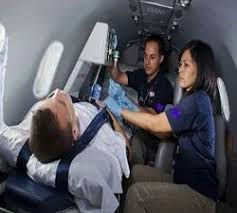
Leaving the hospital is an important milestone for patients recovering from illness, injury or surgery. However, discharge does not always mean that a patient is ready to travel independently, particularly when the journey involves an international flight. Some patients may still need mobility assistance, medication support, follow-up treatment or professional supervision during transportation.
For patients who need to return home or continue their recovery in another country, medical travel arrangements should begin before the discharge date whenever possible. A medical escort may support eligible patients during a commercial flight, depending on their medical condition and the level of assistance required.
Understanding the discharge process, travel requirements and receiving-care arrangements can help families organise a more coordinated journey. This guide explains nine important steps to consider when planning international travel after hospital discharge.
1. Confirm That the Patient Is Medically Stable
The first step is to obtain an assessment from the treating medical team. A patient may be ready to leave the hospital but may still require additional evaluation before undertaking a long-distance journey.
The treating clinician should consider:
- The patient’s current medical condition.
- Recovery progress following surgery or treatment.
- Whether symptoms are adequately controlled.
- Ongoing medication and treatment requirements.
- Mobility and ability to tolerate prolonged travel.
- Any risks associated with changes in altitude or extended sitting.
Patients with unstable conditions or complex medical requirements may need further treatment or specialised transport. Commercial flight suitability must be assessed individually.
2. Obtain a Medical Fitness-to-Fly Assessment
Medical fitness for hospital discharge and fitness for air travel are different considerations. A patient may be suitable for discharge but still require additional precautions before flying.
The treating clinician should evaluate whether the patient can safely undertake the proposed journey and whether any special arrangements are necessary.
Depending on the patient’s condition, the airline may request medical information, completed medical forms or formal clearance. Families should confirm these requirements before booking flights.
3. Understand the Patient’s Care Requirements
Before arranging transportation, families should understand what assistance the patient needs after leaving the hospital. This information helps determine whether a medical escort, ordinary travel assistance or a specialised medical transport arrangement is appropriate.
Care requirements may include:
- Assistance with walking, wheelchair use or transfers.
- Support with prescribed medication schedules.
- Monitoring general wellbeing during the journey.
- Help with approved mobility or medical equipment.
- Assistance with communication and travel coordination.
- Support with agreed personal care requirements.
The exact responsibilities should be discussed and confirmed before travel. A commercial medical escort does not automatically provide hospital-level care, intensive care or advanced life support.
4. Prepare the Hospital Discharge Documents
Accurate medical documentation is essential when a patient travels internationally after hospitalisation. These records help the receiving healthcare provider understand the patient’s diagnosis, treatment history and ongoing requirements.
| Document | Importance |
|---|---|
| Discharge summary | Explains the patient’s hospital stay, diagnosis and treatment. |
| Medical reports | Provides relevant clinical findings and investigation results. |
| Medication list | Records prescribed medicines and instructions. |
| Follow-up recommendations | Explains appointments and continuing treatment requirements. |
| Fitness-to-fly assessment | Documents the clinician’s assessment of travel suitability. |
| Airline medical forms | Provides information requested by the airline, where applicable. |
Families should keep copies of important records in accessible hand luggage and arrange translations if the receiving healthcare provider requires them.
5. Arrange Suitable Ground Transportation
The journey does not begin at the aircraft door. Patients leaving hospital may need assistance travelling from their hospital room to the airport and from the arrival airport to their final destination.
Ground transportation should be selected according to the patient’s mobility and medical requirements.
Planning considerations include:
- Whether the patient requires a wheelchair-accessible vehicle.
- Whether stretcher transportation is necessary and available.
- Whether trained transfer assistance is required.
- The distance between the hospital and airport.
- Whether additional stops or rest periods are needed.
Patients who require continuous specialised medical care during ground transportation may need an appropriately equipped medical transport service.
6. Coordinate Airline and Airport Assistance
Airline arrangements should be confirmed well before departure. Depending on the patient’s condition, special assistance may be needed for check-in, security procedures, boarding, seating and disembarking.
Families should discuss relevant requirements with the airline, including:
- Wheelchair or mobility assistance.
- Medical clearance and required forms.
- Approval for medical equipment.
- Special seating requirements.
- Additional time for boarding and transfers.
- Any restrictions related to the patient’s condition.
Advance communication can help reduce last-minute complications. Airline approval should never be assumed simply because a patient has received medical clearance.
7. Plan Medication and Medical Supplies
Patients travelling after hospital discharge may need to continue treatment throughout the journey. Missing medication or essential supplies can disrupt the care plan.
Before departure, families should:
- Collect all prescribed medicines.
- Confirm medication timing with the treating clinician.
- Carry essential medicines in hand luggage where permitted.
- Prepare a written medication schedule.
- Arrange approved wound-care or medical supplies if required.
- Check destination-country rules for carrying medicines.
If the patient requires specialised equipment, such as oxygen or feeding devices, the family should coordinate with the treating team and airline in advance.
8. Arrange Receiving Care Before Departure
One of the most important parts of international medical travel is ensuring that appropriate support is available after arrival. A patient who has recently left hospital may still need specialist appointments, rehabilitation, nursing support or another hospital admission.
Families should confirm:
- Who will receive the patient at the destination.
- Whether a hospital or clinic appointment is arranged.
- Whether home-care assistance is required.
- How prescribed medication will be continued.
- Whether suitable accommodation and transport are available.
Where possible, medical records should be shared with the receiving healthcare provider before the journey. This can help avoid delays in continuing treatment.
9. Organise a Clear Medical Handover
A well-planned handover helps ensure that important information is communicated when the patient reaches the destination. This is particularly important for patients who require ongoing medical attention after hospital discharge.
The handover may include:
- A summary of the patient’s condition during travel.
- Relevant medication information.
- Details of any changes or concerns during the journey.
- Information about mobility and assistance requirements.
- Copies of discharge and medical documents.
- Confirmation of follow-up arrangements.
A medical escort may assist with an agreed handover to family members or receiving healthcare professionals. The exact level of involvement depends on the patient’s needs and the service arranged.
What Is the Role of a Medical Escort After Hospital Discharge?
A medical escort may accompany an eligible patient on a commercial flight when the patient requires professional support but does not need an air ambulance. The escort’s responsibilities depend on their qualifications, the patient’s condition and the agreed service.
Possible areas of assistance include:
- Supporting the patient’s comfort and mobility.
- Helping coordinate agreed travel arrangements.
- Following an established care plan within professional scope.
- Assisting with communication between the patient and family.
- Supporting the planned handover at the destination.
A medical escort is not a replacement for hospital care or a specialised air ambulance. Patients who require intensive monitoring or advanced medical intervention may need a different transport option.
Frequently Asked Questions
1. Can a patient travel internationally immediately after hospital discharge?
Not necessarily. The patient must be assessed for fitness to fly. The appropriate timing depends on the diagnosis, recovery progress, treatment requirements and airline policies.
2. Is a discharge summary enough for international travel?
A discharge summary is important, but additional medical reports, medication lists, fitness-to-fly documentation and airline forms may also be required.
3. Can a medical escort collect a patient directly from the hospital?
Travel coordination may include assistance with a hospital-to-airport transfer, depending on the agreed service and the patient’s requirements. Ground transportation arrangements should be confirmed in advance.
4. What if the patient needs further treatment after arriving home?
Families should coordinate with a receiving hospital, clinic or healthcare provider before departure. Sharing medical records in advance can help support continuity of care.
5. Is a medical escort suitable for every patient after hospital discharge?
No. Some patients can travel independently, while others need a medical escort or specialised medical transportation. The appropriate option depends on the patient’s clinical condition and required level of care.
Conclusion: Making International Travel After Hospital Discharge Easier to Coordinate
International travel after hospital discharge involves more than arranging a flight. Medical clearance, discharge documentation, medication, ground transportation, airline assistance and receiving care should all be coordinated before departure.
A medical escort may provide valuable assistance to suitable patients who need professional support during a commercial flight. Early communication between the treating hospital, family, airline and travel support provider can help create a more organised journey.
If you are planning international travel or medical repatriation for someone recently discharged from hospital, MedEscort International can help you discuss the patient’s travel requirements and possible support arrangements.
Contact MedEscort International
Phone: +91 9774900430
Email: alan@medescortinternational.com
Website: https://medescortinternational.com/