


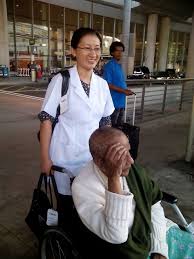
International travel can be challenging for people living with severe visual impairment or blindness. Navigating unfamiliar airports, reading departure information, identifying boarding gates, and managing connecting flights can require additional support. Long-distance journeys may become more demanding when visual impairment is combined with other medical conditions or mobility difficulties.
For patients who need assistance, an international medical escort may help coordinate travel arrangements and provide agreed support throughout the journey. Careful planning can help patients and families prepare for airport procedures, communication, personal needs, and arrival at the destination.
Understanding Severe Visual Impairment and Its Impact on Travel
Visual impairment ranges from reduced vision to complete blindness. Some people may have difficulty recognising faces, reading signs, identifying obstacles, or navigating unfamiliar environments.
Common travel challenges include:
Finding check-in counters and boarding gates.
Reading airport signs and departure information.
Navigating crowded terminals and security areas.
Identifying luggage and personal belongings.
Understanding unfamiliar surroundings.
Managing connecting flights and airport transfers.
The level of assistance required depends on the patient’s remaining vision, mobility, confidence, and any additional health conditions.
Why Medical Escort Support May Be Helpful
Some visually impaired patients may benefit from additional assistance when travelling internationally, particularly if they have limited mobility or other medical needs.
Depending on the patient’s requirements, escort qualifications, and agreed service, support may include:
Assisting with airport navigation and transfers.
Helping coordinate check-in and boarding arrangements.
Supporting communication with airline personnel.
Helping organise medical documents and travel information.
Coordinating with family members and receiving caregivers.
Providing agreed assistance with general travel needs.
A medical escort does not automatically provide specialist visual rehabilitation or personal-care services. The level of support should be discussed and agreed before travel.
7 Important Tips for Travelling Internationally with Severe Visual Impairment
1. Arrange Medical Assessment Before Travel
Before booking an international flight, consult the patient’s treating clinician, particularly if visual impairment is associated with an ongoing medical condition or recent surgery.
The assessment should consider the patient’s overall health, mobility, medication requirements, and fitness to fly.
Patients who have recently experienced sudden vision changes or other new symptoms should receive appropriate medical assessment before making travel arrangements.
2. Request Airport Assistance in Advance
Most major airports offer assistance for passengers with visual impairments.
Contact the airline before departure to discuss available services, including:
Assistance from check-in to the boarding gate.
Guidance through security procedures.
Help locating airport facilities.
Support during boarding and disembarkation.
Assistance during connecting flights.
Confirm exactly where the assistance begins and ends so there are no gaps during the journey.
3. Prepare Important Travel Information in Accessible Formats
Travel documents should be organised in a format the patient can access.
Depending on the patient’s preferences, useful arrangements may include:
Digital documents compatible with screen readers.
Large-print copies for passengers with partial vision.
Voice notes containing important travel information.
Contact details saved on a mobile phone.
Clearly labelled medication and personal-care items.
Keep essential information accessible to both the patient and the accompanying person.
4. Plan Medication and Medical Equipment
Some patients with visual impairment also manage conditions that require regular medication or medical equipment.
Before departure:
Prepare an updated medication list.
Keep essential prescribed medication in hand luggage.
Use clearly identifiable medication packaging.
Arrange accessible reminders for medication times.
Carry relevant medical documents.
Check airline requirements for any medical equipment.
Patients should not change prescribed medication schedules without consulting their healthcare provider.
5. Explain the Patient’s Preferred Assistance Method
Not every visually impaired person requires the same type of support. Some may prefer verbal directions, while others may need physical guidance.
Before travelling, discuss the patient’s preferences with the escort or accompanying person.
Helpful practices may include:
Introducing yourself before offering assistance.
Giving clear verbal directions.
Explaining obstacles and changes in surroundings.
Asking before touching or guiding the patient.
Describing important surroundings when necessary.
Keeping belongings in consistent locations.
Respecting the patient’s independence and preferred communication style is important.
6. Prepare for Boarding and In-Flight Needs
Boarding an aeroplane can involve unfamiliar procedures and crowded spaces.
Passengers may benefit from discussing their requirements with the airline before departure.
Consider:
Assistance locating the assigned seat.
An explanation of the seat layout and nearby facilities.
Help identifying the call button and safety information.
Assistance locating personal belongings.
Clear communication about changes during the flight.
Cabin crew should be informed about relevant assistance requirements so they can follow applicable airline procedures.
7. Coordinate Arrival and Receiving Support
Planning should continue beyond the flight.
Before departure, confirm who will meet the patient at the destination and how they will reach their accommodation or healthcare provider.
Families should arrange:
Airport assistance after landing.
Suitable ground transportation.
A receiving caregiver or family member.
Accessible accommodation where required.
Any ongoing medical appointments or care arrangements.
Share the patient’s communication and assistance preferences with the receiving person in advance.
Managing Comfort During a Long International Flight
Long flights can be tiring, particularly when passengers need additional assistance navigating unfamiliar environments.
The following arrangements may help:
Keep essential medication and personal items accessible.
Inform cabin crew about the patient’s visual impairment.
Request assistance with locating the seat and facilities.
Keep frequently used belongings in consistent places.
Use accessible digital travel information.
Allow enough time for transfers and airport procedures.
Follow medical advice regarding movement and positioning.
Passengers should communicate any additional medical or mobility needs before departure.
What Families Should Consider Before Booking a Medical Escort
Before confirming an international medical escort service, families should discuss the patient’s individual requirements.
Important considerations include:
The degree of visual impairment.
Whether the patient has additional medical conditions.
Mobility and personal assistance requirements.
Preferred communication and guidance methods.
The escort’s qualifications and professional scope.
Airline accessibility arrangements.
Ground transportation requirements.
Receiving arrangements at the destination.
If the patient requires clinical monitoring or specialist medical care during transport, families should establish whether a commercial flight with an escort is appropriate or whether specialist medical transport is needed.
When Should Travel Be Postponed?
Travel should be reconsidered if the patient has an acute medical problem or is not medically stable.
Seek medical assessment before departure if the patient experiences:
Sudden or unexplained loss of vision.
New severe eye pain.
Recent eye surgery without medical clearance.
Severe dizziness or balance problems.
New neurological symptoms.
Other serious medical complications.
Sudden vision loss requires urgent medical assessment. The treating clinician should determine whether the patient is fit to fly and what support is appropriate.
How MedEscort International Can Help
MedEscort International assists patients and families with international medical travel and repatriation arrangements.
Depending on the patient’s condition and agreed service, our team may help coordinate medical escort support, travel preparation, airport assistance, and communication with family members and receiving caregivers.
Each journey is assessed individually, taking into account medical stability, mobility, communication preferences, airline requirements, and destination arrangements.
Planning international travel for someone with severe visual impairment?
Contact MedEscort International to discuss the patient’s travel requirements.
Phone: +91 9774900430
Email: alan@medescortinternational.com
Website: medescortinternational.com
Frequently Asked Questions
1. Can a blind person travel internationally by aeroplane?
Yes, many blind and visually impaired passengers travel internationally. The appropriate assistance depends on the person’s mobility, overall health, communication preferences, and individual needs.
2. Can I request airport assistance for visual impairment?
Yes. Airlines and airports generally provide assistance services for passengers with disabilities. Contact the airline in advance to confirm the available arrangements.
3. Can a medical escort guide a visually impaired passenger through an airport?
A medical escort may provide agreed assistance with airport navigation and travel coordination, depending on their qualifications and the service arranged. Additional specialist assistance may need to be organised separately.
4. Should visually impaired passengers carry medical documents?
Yes. Passengers should carry relevant medical summaries, medication information, prescriptions, and emergency contact details in accessible formats where possible.
5. What should families arrange before the patient arrives?
Families should confirm airport assistance, ground transportation, receiving support, accessible accommodation, and any ongoing healthcare arrangements.
Final Thoughts
International travel with severe visual impairment requires careful preparation and clear communication. Airport assistance, accessible travel information, medication planning, and suitable receiving arrangements can help make the journey more organised.
For patients who are medically stable and approved to fly, an international medical escort may provide useful assistance with travel coordination and agreed support. Every journey should be planned around the patient’s individual needs, independence, and professional medical advice.
Medical Disclaimer: This article is for general informational purposes only and does not replace professional medical advice, diagnosis, or treatment. Patients should consult their treating clinician about medical fitness to fly. Commercial medical escort services are different from specialist air ambulance services and cannot replace hospital-level care.