


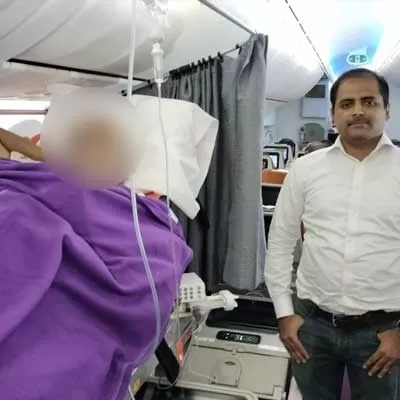
After surgery, many patients look forward to returning home, reuniting with family or continuing their recovery in a familiar environment. For patients who have received treatment abroad, an international flight may be an important part of the recovery journey.
However, flying after surgery requires careful consideration. The timing of travel, type of procedure, recovery progress and risk of complications can all influence whether a patient is ready to fly.
Some patients may be able to travel on a commercial flight with appropriate arrangements, while others may need to delay travel or consider specialised medical transportation.
This guide explains eight important things patients and families should know before arranging a flight after surgery.
Can You Fly After Surgery?
Yes, some patients can travel by plane after surgery. However, there is no single waiting period that applies to every operation.
The appropriate time to fly depends on:
Type of surgery performed.
Recovery progress.
Presence of complications.
Patient’s general health.
Ability to remain seated during the journey.
Risk of blood clots.
Need for medical monitoring or assistance.
Airline medical requirements.
The treating surgeon or doctor should assess the patient’s fitness to fly before tickets are booked.
8 Important Things to Consider Before Flying After Surgery
1. Type of Surgery Performed
Different surgical procedures have different recovery requirements.
For example, the considerations after a minor procedure may differ significantly from those following major abdominal, orthopaedic, cardiac or neurological surgery.
Some procedures may involve restrictions on movement, lifting, sitting or changes in cabin pressure.
The treating surgeon should explain when air travel may be appropriate and whether any additional precautions are required.
2. Recovery Time and Medical Stability
A patient may feel better after surgery but still need time to recover before travelling.
Before approving a flight, the treating medical team may assess:
Wound healing.
Pain management.
Mobility.
Ability to tolerate sitting.
Risk of infection.
Breathing and circulation.
Presence of post-operative complications.
A patient should not assume that being discharged from hospital automatically means they are fit to fly.
Hospital discharge and fitness for air travel are separate decisions.
3. Risk of Blood Clots During Long Flights
One important consideration after certain operations is the risk of developing blood clots.
Long periods of sitting and reduced movement during a flight can increase the risk of venous thromboembolism in some passengers. Recent surgery may add to this risk.
The treating doctor should assess individual risk factors and recommend appropriate precautions.
Depending on the clinical assessment, these may include:
Movement when medically appropriate.
Leg exercises.
Adequate hydration.
Prescribed compression stockings.
Medication when clinically indicated.
Patients should not start blood-thinning medication or use compression garments without appropriate medical advice.
4. Ability to Sit During the Flight
Commercial airline passengers generally need to remain seated for much of the journey.
After surgery, some patients may experience pain, restricted movement or difficulty maintaining a comfortable position.
Before booking, consider:
Can the patient sit upright?
Can they remain seated for the expected journey duration?
Do they need assistance moving?
Are they able to use the aircraft toilet?
Do they need wheelchair assistance?
Is a standard airline seat medically appropriate?
If the patient cannot travel safely in a standard seat, an alternative arrangement may need to be considered.
5. Wound Care and Medical Supplies
Patients recovering from surgery may need dressings, medication and other medical supplies during travel.
Before departure, families should ask the treating team how to manage wound care during the journey.
Preparation may include:
Carrying prescribed medication in hand luggage.
Keeping medical supplies accessible.
Carrying relevant prescriptions.
Preparing a medical summary.
Following instructions for wound protection.
Confirming whether any medical equipment requires airline approval.
Any concerns about bleeding, wound infection or worsening symptoms should be discussed with the treating medical team before travel.
6. Pain Management and Medication Schedule
Pain and discomfort can make long-distance travel difficult after surgery.
Patients should discuss pain management with their treating doctor before flying.
Important considerations include:
Medication timing.
Prescribed dosage.
Possible side effects.
Medication storage requirements.
Time-zone differences.
Availability of medication at the destination.
Patients should carry sufficient prescribed medication for the journey and follow the instructions provided by their healthcare professional.
7. Airline Medical Clearance
Some airlines require medical clearance when a passenger has recently undergone surgery or has a condition that may affect safe travel.
The airline may request medical documentation or a medical information form.
Depending on the passenger’s condition, additional arrangements may be needed for:
Wheelchair assistance.
Stretcher transportation.
Medical equipment.
Oxygen.
Special seating.
An accompanying medical professional.
Requirements differ between airlines, so families should contact the airline before confirming the journey.
8. Assistance During the Journey
Some patients may need additional help during airport procedures and the flight.
Depending on their recovery and mobility, assistance may include:
Wheelchair coordination.
Support during airport transfers.
Help with boarding and disembarking.
Medical observation within professional scope.
Agreed medication-related assistance.
Communication with family members.
For eligible patients, a qualified medical escort may accompany them on a commercial flight and provide agreed support during the journey.
How Long Should You Wait Before Flying After Surgery?
There is no universal waiting period after surgery.
The appropriate timing depends on the procedure, recovery, complications and individual medical risks.
The treating surgeon should provide specific advice based on the patient’s condition.
Families should also check the airline’s medical travel requirements. Even when a doctor considers a patient fit to fly, the airline may require additional approval.
It is important not to use general online waiting periods as a substitute for individual medical advice.
Can a Medical Escort Help After Surgery?
Yes. A medical escort may be useful for eligible patients who are medically suitable for commercial air travel but need professional assistance during the journey.
Depending on the agreed service and the professional’s qualifications, support may include:
Observing the patient’s condition during travel.
Assisting with agreed mobility arrangements.
Providing medication-related assistance within professional scope.
Supporting airport transfers and boarding.
Communicating relevant concerns.
Coordinating the planned arrival handover.
A medical escort does not replace the treating surgeon’s fitness-to-fly assessment.
The patient must also meet airline requirements. If the patient needs intensive care, advanced life support or dedicated medical transportation, a commercial flight with a medical escort may not be appropriate.
Medical Escort vs Air Ambulance After Surgery
The appropriate transport option depends on the patient’s medical condition and the level of support required.
| Feature | Medical Escort | Air Ambulance |
|---|---|---|
| Aircraft | Scheduled commercial flight | Dedicated medical aircraft |
| Patient suitability | Requires fitness for commercial air travel | May accommodate patients requiring specialised transport |
| Patient position | Usually standard airline seating | May accommodate stretcher transport |
| Medical support | Provided within the escort’s professional scope | Configured according to the transport care plan |
| Equipment | Subject to airline approval | May accommodate specialised medical equipment |
| Scheduling | Depends on airline availability | Planned around the medical transfer |
| Cost | May be more economical | Generally higher |
A medical escort may be an option for a recovering patient who can safely travel commercially. An air ambulance may be considered when dedicated medical transportation is required.
Checklist Before Booking a Flight After Surgery
Families can use this checklist when preparing for international travel.
Medical preparation
Obtain approval from the treating surgeon.
Confirm the patient’s fitness to fly.
Discuss the risk of blood clots.
Confirm medication and wound-care instructions.
Obtain a medical summary.
Travel arrangements
Check airline medical requirements.
Confirm seating and mobility needs.
Arrange wheelchair assistance if required.
Check connecting flight arrangements.
Confirm whether a medical escort is appropriate.
Arrival arrangements
Arrange suitable ground transportation.
Confirm who will receive the patient.
Keep medical documents accessible.
Arrange follow-up care at the destination.
Frequently Asked Questions
1. Can I fly one week after surgery?
It depends on the type of surgery, recovery progress and individual medical risks. The treating surgeon must assess whether flying is appropriate. Airline requirements should also be checked.
2. Can I fly after major surgery?
Some patients may be able to fly after major surgery once they have recovered sufficiently and received medical clearance. Others may need a longer recovery period or specialised transportation.
3. Is it safe to fly after an operation?
It can be safe for medically suitable patients, but the risks depend on the procedure and individual health. A treating clinician should assess fitness to fly before travel.
4. Can I travel internationally after surgery with a medical escort?
Some patients can travel internationally on commercial flights with a qualified medical escort, provided they are medically suitable and the airline approves the necessary arrangements.
5. Why is flying after surgery associated with blood clot concerns?
Surgery and prolonged immobility can increase the risk of blood clots in some patients. Long flights may add to this risk because passengers remain seated for extended periods. Individual precautions should be discussed with a doctor.
6. Can I fly after orthopaedic surgery?
It depends on the procedure, mobility, recovery and ability to remain seated comfortably. The surgeon should provide specific advice and explain any restrictions.
7. Can a medical escort help with medication during a flight?
A medical escort may provide agreed medication-related assistance within their professional qualifications and scope. The exact responsibilities should be confirmed before travel.
8. What if my doctor approves travel but the airline refuses?
Airlines have their own medical clearance and passenger acceptance requirements. Families should contact the airline early, provide requested documentation and discuss alternative arrangements if approval is not granted.
Planning Your Journey After Surgery With MedEscort International
Returning home after surgery in another country can involve more than arranging an airline ticket. Patients and families may need to coordinate medical clearance, travel assistance, airline requirements and arrival arrangements.
MedEscort International helps patients and families explore international medical escort arrangements for eligible patients travelling on commercial flights.
If your loved one has completed treatment abroad and needs professional assistance during the journey home, contact our team to discuss the patient’s travel requirements.
Contact MedEscort International
Phone: +91 9774900430
Email: alan@medescortinternational.com
Website: MedEscort International
Need assistance travelling after surgery? Contact MedEscort International to discuss suitable medical escort arrangements for your international journey.