


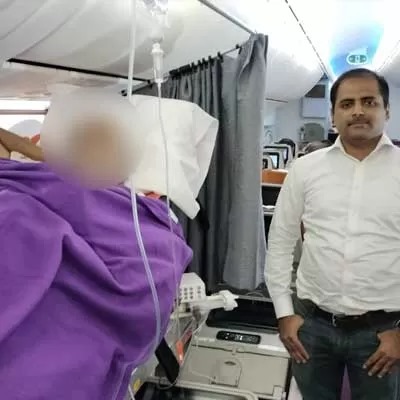
International travel can become more challenging as people grow older. Long airport queues, mobility difficulties, medication schedules and the physical demands of flying may make a journey difficult for elderly passengers.
For seniors travelling after an illness, hospitalisation or a period of reduced mobility, additional assistance may be helpful. In some situations, a medical escort for elderly patients may provide professional support during a commercial flight.
A medical escort is a qualified healthcare professional who accompanies an eligible patient and provides agreed assistance during the journey. The level of support depends on the patient’s condition, the professional’s scope and the arrangements approved by the airline.
This guide explains how elderly patients may travel with a medical escort and what families should consider before making arrangements.
Can Elderly Patients Travel by Plane With a Medical Escort?
Yes. Some elderly patients can travel on commercial flights with a medical escort, provided they are medically suitable for air travel and meet the airline’s requirements.
Age alone does not determine whether someone can fly. The patient’s overall health, mobility, medical condition and ability to tolerate the journey are more important considerations.
A medical escort may assist with agreed aspects of the journey, including:
Monitoring the patient’s condition within their professional scope.
Providing medication reminders or assistance as agreed.
Supporting mobility and transfers.
Helping the patient manage the travel process.
Communicating relevant concerns to the family or appropriate medical personnel.
A medical escort does not automatically provide hospital-level care or intensive care during a commercial flight.
8 Important Things to Consider Before an Elderly Patient Travels
1. Medical Fitness to Fly
Before booking a flight, the patient’s treating doctor should assess whether they are medically fit to travel.
Older adults may have existing medical conditions or recent health changes that require additional consideration.
The assessment may consider:
Current medical stability.
Recent hospitalisation.
Recent surgery or treatment.
Breathing and circulation concerns.
Ability to tolerate sitting during the journey.
Risk of deterioration during travel.
Need for medical support.
If the patient’s condition is unstable or requires a level of care that cannot be provided on a commercial flight, another transport arrangement may be necessary.
2. Mobility and Airport Assistance
Some elderly passengers experience difficulty walking long distances, standing for extended periods or moving between airport terminals.
A medical escort may help coordinate agreed mobility assistance during the journey.
Depending on the arrangements, airport support may include:
Wheelchair assistance.
Support during airport transfers.
Help navigating check-in and boarding procedures.
Assistance moving between connecting flights.
Coordination with airline staff.
Families should confirm which services are provided by the medical escort and which must be arranged directly with the airline.
3. Medication Management During Travel
Many elderly patients take regular medication for ongoing health conditions.
International travel can affect medication routines because of time differences, flight duration and changes in daily schedules.
Before departure, families should prepare:
A current medication list.
Prescriptions where required.
Clearly labelled medication packaging.
Instructions from the treating doctor.
Information about medication timing.
Details of any medication storage requirements.
A medical escort may provide agreed assistance with medication routines within their professional scope. Families should confirm this in advance rather than assume every escort service includes medication administration.
4. Managing Long Flights and Time Differences
Long-distance flights can be tiring, particularly for elderly passengers who have limited mobility or reduced stamina.
Families should discuss the expected journey duration with the treating clinician.
Depending on the patient’s condition, travel planning may consider:
Scheduled breaks during airport transfers.
Suitable seating arrangements.
Wheelchair assistance.
Hydration and meal requirements.
Medication timing across time zones.
Connecting flight duration.
Rest arrangements before and after travel.
The medical escort can help coordinate agreed support, but the travel plan should be based on the patient’s individual medical needs.
5. Medical Documents and Airline Requirements
Airlines may require medical information or additional approval when a passenger has a health condition or needs special travel arrangements.
Requirements vary between airlines and routes.
Families should check whether the airline requires:
Medical clearance.
A medical information form.
A doctor’s fitness-to-fly letter.
Approval for medical equipment.
Confirmation of seating or mobility arrangements.
Details of the accompanying medical professional.
Preparing documents early can help reduce avoidable delays.
6. Support During Boarding and Transfers
Airport procedures can be physically demanding for elderly patients.
Boarding, security checks, immigration procedures and connecting flights may require additional coordination.
Depending on the agreed service, a medical escort may assist the patient with:
Moving through the airport.
Coordinating wheelchair assistance.
Managing travel documents.
Boarding and disembarking.
Navigating connecting airports.
Communicating with relevant airline personnel.
The exact assistance available depends on the patient’s mobility, airline arrangements and the escort’s responsibilities.
7. Communication With Family Members
Families may feel anxious when an elderly relative travels internationally, especially if the patient is returning home after hospitalisation.
Clear communication can help families understand the journey and prepare for the patient’s arrival.
Before departure, confirm:
Who will accompany the patient.
The expected travel schedule.
The departure and arrival airports.
Who will receive the patient.
How updates will be communicated.
What happens if a flight is delayed or changed.
A clear communication plan helps everyone involved understand their responsibilities.
8. Arrival and Ground Transportation
The journey does not finish when the aircraft lands.
An elderly patient may need assistance travelling from the arrival airport to their home, hospital or care facility.
Families should consider:
Airport wheelchair assistance.
Suitable ground transportation.
The distance to the final destination.
Mobility requirements.
Medication and personal belongings.
Whether a family member or caregiver will be present.
If the patient needs medical support during the road journey, appropriate transportation should be arranged in advance.
What Does a Medical Escort Do for an Elderly Patient?
The responsibilities of a medical escort depend on the patient’s condition and the agreed service.
Possible responsibilities may include:
| Area of Support | How Assistance May Be Provided |
|---|---|
| Travel coordination | Helping the patient follow the agreed travel plan |
| Mobility | Supporting agreed transfers and coordinating wheelchair assistance |
| Medical observation | Observing the patient within professional scope |
| Medication | Providing agreed medication-related assistance |
| Communication | Sharing relevant travel updates with the family |
| Airport procedures | Assisting with agreed boarding and transfer arrangements |
| Arrival coordination | Supporting the planned handover and ground transfer |
Families should request a clear explanation of the escort’s qualifications, responsibilities and limitations before confirming the service.
Medical Escort vs Air Ambulance for Elderly Patients
An elderly patient does not automatically need an air ambulance simply because of their age or medical history.
Some seniors may be suitable for commercial flights with a medical escort. Others may require a dedicated medical aircraft.
| Feature | Medical Escort | Air Ambulance |
|---|---|---|
| Aircraft | Scheduled commercial airline | Dedicated medical aircraft |
| Patient suitability | Requires fitness for commercial air travel | May accommodate patients requiring dedicated medical transportation |
| Medical support | Provided within the escort’s professional scope | Configured according to the transport care plan |
| Patient position | Usually standard airline seating | May accommodate stretcher transportation |
| Medical equipment | Subject to airline approval and restrictions | May carry specialised medical equipment |
| Cost | May be more economical | Generally higher |
| Scheduling | Depends on airline availability | Planned around the medical transfer |
The treating clinician should assess the patient’s fitness to fly and recommend the appropriate level of transportation. The airline must also approve any necessary medical arrangements.
How to Prepare an Elderly Patient for International Travel
Good preparation can make an international journey more manageable.
Families can use the following checklist:
Before booking
Discuss fitness to fly with the treating doctor.
Confirm the patient’s mobility and support needs.
Check airline medical requirements.
Identify suitable flight routes.
Discuss whether a medical escort is appropriate.
Before departure
Prepare medical reports and prescriptions.
Pack regular medication in suitable carry-on luggage.
Arrange wheelchair assistance if required.
Confirm the escort’s responsibilities.
Organise airport transfers.
Share emergency contact information.
After arrival
Confirm who will receive the patient.
Arrange suitable ground transportation.
Ensure medication and medical documents are available.
Follow the treating clinician’s recommendations.
Frequently Asked Questions
1. Can an 80-year-old travel internationally by plane?
Age alone does not prevent someone from flying. The person’s medical condition, mobility, fitness to fly and airline requirements determine whether commercial air travel is appropriate.
2. Can a medical escort accompany an elderly person on a long flight?
Yes, if the patient is suitable for commercial air travel and the airline approves the required arrangements. The escort provides agreed assistance within their professional scope.
3. Is a medical escort necessary for every elderly traveller?
No. Many older adults travel independently or with family assistance. A medical escort may be considered when a passenger needs professional support because of a medical condition or recovery needs.
4. Can an elderly patient travel after hospitalisation?
Some patients can travel after hospitalisation, but the timing depends on their recovery and medical stability. The treating doctor should assess fitness to fly before arrangements are made.
5. Can a medical escort help with medication during a flight?
Depending on the escort’s qualifications and agreed responsibilities, medication-related assistance may be provided within their professional scope. Families should confirm the exact arrangements in advance.
6. Can an elderly patient with limited mobility travel on a commercial flight?
Some passengers with limited mobility can travel with airline assistance and appropriate arrangements. The patient’s medical condition and ability to tolerate the journey must be assessed individually.
7. What if an elderly patient cannot sit upright during a flight?
Standard commercial airline seating may not be appropriate. Depending on the patient’s requirements and airline availability, an approved stretcher arrangement or dedicated air ambulance may need to be considered.
8. How do I arrange a medical escort for an elderly family member?
Prepare the patient’s medical summary, current location, destination and preferred travel date. Contact a medical escort provider to discuss the patient’s needs, professional support requirements and airline arrangements.
Arrange International Medical Travel With MedEscort International
International travel can be challenging for elderly patients, particularly when they need assistance after illness, hospitalisation or reduced mobility.
MedEscort International helps patients and families explore international medical escort arrangements for eligible patients travelling on commercial flights.
If your elderly family member needs professional assistance during an international journey, contact our team to discuss the travel requirements and information needed to explore suitable arrangements.
Contact MedEscort International
Phone: +91 9774900430
Email: alan@medescortinternational.com
Website: MedEscort International
Planning an international journey for an elderly family member? Contact MedEscort International to discuss suitable medical escort arrangements.