


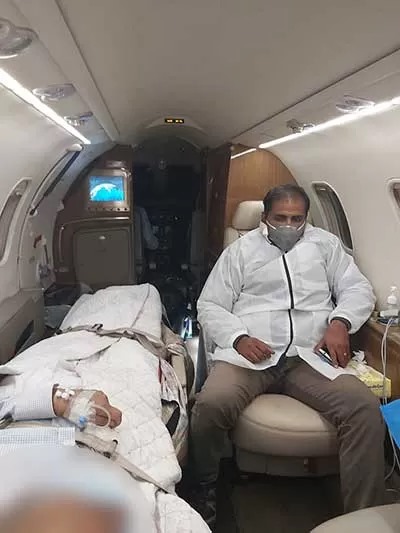
Confronting severe high-energy polytrauma, unstable pelvic ring disruptions (such as open-book or vertical shear fractures), multi-segmental long-bone fractures, or acetabular reconstructions sustained abroad represents a critical clinical and mechanical journey. Every year, international civil infrastructure contractors, industrial engineers, extreme terrain expeditioners, motorcycling travelers, and Non-Resident Indians (NRIs) sustain catastrophic multi-system orthopedic trauma while working or traveling across the Indian subcontinent. Quaternary level-1 trauma centers across Delhi NCR, Mumbai, Bengaluru, Chennai, and Hyderabad deliver urgent damage-control orthopedics: emergent retroperitoneal pelvic packing, application of anterior external fixators (Ex-Fix), pelvic C-clamps, open reduction and internal fixation (ORIF) with reconstruction plates, and intramedullary stabilization. Once hemorrhagic shock is controlled, pelvic and retroperitoneal hematomas stabilize, systemic inflammatory response syndrome (SIRS) abates, and patients reach transportable equilibrium, organizing an international patient transfer from India back to domestic level-1 trauma networks, orthopedic reconstruction institutes, or inpatient rehabilitation hospitals in North America, Europe, the United Kingdom, Australasia, or the Middle East becomes the primary operational goal. Because dedicated private charter air ambulances across transcontinental routes demand staggering six-figure sums, scheduled commercial airline stretcher configurations provide a biomechanically stable, vibration-damped, and cost-effective corridor for moving patients from India under dedicated trauma physician and critical care nurse oversight.
At MedEscort International, our critical care aeromedical flight doctors and orthopedic trauma-certified flight nurses coordinate every clinical, neurovascular, and biomechanical facet of patient transfer from India for acute polytrauma and pelvic fracture travelers. We oversee every logistical stage of moving patients from India, ensuring strict axial pelvic stability, non-weight-bearing limb positioning, continuous hemorrhagic surveillance, aggressive deep vein thrombosis (DVT) prophylaxis, multimodal analgesia, and seamless bedside-to-bedside care. Learn more about our background and global standards on our About Us Page.
Understanding Orthopedic Polytrauma Aeromedical Dynamics During Patient Transfer from India
Transporting a patient recovering from an unstable pelvic fracture, multiple long-bone fixations, or severe skeletal polytrauma aboard a commercial passenger airliner requires careful management of altitude physics, blood volume mechanics, and cabin vibration dynamics. Commercial airliners cruise at pressurized cabin altitudes equivalent to 6,000 to 8,000 feet above sea level. This hypobaric cabin environment produces a drop in barometric pressure that results in lower alveolar oxygen tension ($PaO_2$). In severe polytrauma patients recovering from significant blood loss, hemorrhagic shock, or fat embolism syndrome (FES), baseline oxygen-carrying capacity and pulmonary diffusion are frequently reduced; cruising hypobaric hypoxia can trigger subclinical arterial desaturation unless supplemental oxygen is carefully administered. In accordance with Boyle’s Law, gas trapped within body cavities expands by 25% to 30% during cabin ascent. For polytrauma patients who sustained concurrent blunt abdominal trauma, paralytic ileus, or resolving pneumothoraces/hemothoraces, intraluminal gas expansion can elevate intra-abdominal pressure, compressing the inferior vena cava (IVC) and compromising venous return to the heart. Trapped atmospheric air in closed compartments can also cause severe pain. Furthermore, pelvic disruptions carry an exceptionally high risk of venous thromboembolism (VTE); prolonged immobility in pressurized aircraft cabins compounds this risk, necessitating scheduled low-molecular-weight heparin (LMWH) regimens, graded compression stockings, and portable pneumatic compression devices on uninjured extremities. When moving patients from India, our aeromedical flight crew enforces continuous neurovascular status checks (color, warmth, pulse Doppler, capillary refill, sensation, motor function), strict non-weight-bearing positioning, and multimodal analgesia compliant with IATA and DGCA India regulations.
Customized travel options for polytrauma and pelvic fracture patient transfer from India include:
Commercial Airline Stretcher Service (Constructed across 6 to 9 economy rows on wide-body aircraft to accommodate recumbent stretchers, specialized abduction wedges, external fixator clearances, and full clinical monitoring)
Continuous DGCA, FAA & EASA-approved Portable Oxygen Concentrators (POC) with 150% battery backup capacity to maintain tissue and microvascular oxygenation
Precision battery-operated syringe-driver pumps for continuous intravenous analgesia (e.g., fentanyl, multimodal adjuncts) and maintenance fluid hydration
Pelvic circumferential binders, custom abduction pillows, and padded external fixator protective shields to protect aircraft interiors and prevent construct shifts
Aviation-cleared portable sequential compression devices (SCD) for uninjured limbs combined with scheduled anticoagulant administration
Direct bedside-to-bedside coordination uniting sending orthopedic trauma ICUs in India with receiving trauma and reconstructive services abroad
Discover our complete portfolio of international patient transport and aeromedical solutions on our Our Services Page.
Moving Patients from India Across Major Global Polytrauma Corridors
We coordinate specialized pelvic fracture, polytrauma, and orthopedic reconstructive flight repatriations from premier Indian tertiary centers to leading international trauma hospitals, including:
Delhi (DEL) / Mumbai (BOM) to Sunnybrook Health Sciences Centre (Tory Trauma Program) Toronto & Vancouver General Hospital [Canada]
Delhi (DEL) / Bengaluru (BLR) to R Adams Cowley Shock Trauma Center Baltimore, Hospital for Special Surgery (HSS) New York & Harborview Medical Center Seattle [USA]
Mumbai (BOM) / Delhi (DEL) to Major Trauma Centre at St George’s Hospital London & Queen Elizabeth Hospital Birmingham [UK]
Chennai (MAA) / Hyderabad (HYD) / Kochi (COK) to Sheikh Shakhbout Medical City Trauma Center Abu Dhabi & Rashid Hospital Trauma Centre Dubai [Middle East]
Delhi (DEL) / Mumbai (BOM) to The Alfred Trauma Centre Melbourne & Royal Prince Alfred Hospital Sydney [Australia]
Our case management team coordinates directly with major international carriers (including Air India, Emirates, Qatar Airways, British Airways, and Singapore Airlines) to arrange priority medical clearance (MEDIF), wide-body stretcher installation, and low-vibration tarmac ambulift boarding.
Clinical Profiles Benefiting from Moving Patients from India
Unstable Pelvic Ring Fractures Post-Fixation (Tile Type B/C)
Patients recovering from open-book fractures, sacroiliac joint disruptions, or vertical shear injuries stabilized with internal plates or external fixators who require strict non-weight-bearing recumbent transit.
Acetabular Fractures Post-ORIF
Individuals who have undergone complex open reduction and internal fixation for posterior wall, column, or transverse acetabular fractures requiring leg abduction maintenance and deep vein thrombosis prophylaxis.
Multiple Long-Bone Fractures with Concomitant Thoracic Contusions
Polytrauma patients with stabilized bilateral femoral or tibial intramedullary nails, resolved pulmonary contusions, and stable chest tubes who are cleared for commercial flight transit.
External Fixation (Ex-Fix) Convalescence
Patients with temporary or definitive multi-pin external skeletal fixation frames applied across joints, requiring pin-site care, sterile barrier dressings, and padded cushioning during transport.
Advanced In-Flight Care & Specialized Polytrauma Equipment
When carrying out a patient transfer from India for acute polytrauma and pelvic fracture travelers, our flight clinicians deploy specialized monitoring, stabilization, and neurovascular kits compliant with civil aviation standards:
High-frequency bidirectional vascular Doppler probes to assess pedal pulses (dorsalis pedis, posterior tibial) and identify early compartmental or perfusion deficits
Continuous multi-parameter hemodynamic telemetry: continuous 12-lead ECG rhythm strips, automated non-invasive blood pressure, high-resolution pulse oximetry ($SpO_2$), and digital core body temperature monitoring
Aviation-cleared Portable Oxygen Concentrators (POC) with 150% battery backup capacity for continuous tissue oxygen delivery
Biomechanical support and immobilization equipment: pelvic binders, rigid abduction pillows, padded external fixator covers, and full-length vacuum splints
Trauma pharmacopoeia: continuous syringe-driver analgesia, breakthrough pain medications, prophylactic antispasmodics, and low-molecular-weight heparins
All medical personnel assigned to polytrauma escort missions are board-certified critical care intensivists, trauma anesthesiologists, or orthopedic trauma flight nurses with extensive training in skeletal stabilization and hemodynamic monitoring.
Complete Bedside-to-Bedside Logistics
Our bedside-to-bedside coordination ensures seamless clinical continuity throughout every stage of moving patients from India to receiving medical centers abroad:
Direct bedside assessment, review of pre-flight pelvic and long-bone radiographs/CT scans, surgical construct stability audit, hemoglobin and coagulation status checks, and detailed handover from treating orthopedic trauma surgeons in India
Mobile Intensive Care Unit (MICU) ground ambulance transport equipped with advanced air-suspension stretcher systems directly to the departure aircraft
Priority tarmac ambulift boarding directly through aircraft service doors, maintaining smooth, shear-free lateral transfers onto the commercial stretcher without axial twisting or pelvic torsion
In-flight clinical supervision: continuous vital signs monitoring, scheduled 2-hour distal neurovascular assessments, strict non-weight-bearing positioning, and timed analgesia titration
Expedited port health, customs, and immigration clearances upon international arrival
Receiving ground ambulance transfer directly to the destination hospital’s orthopedic trauma ward, reconstructive surgical theater, or specialized rehabilitation unit
Learn more about our comprehensive door-to-door escort process on our Patient Transfer Services.
Benefits of Choosing a Commercial Medical Escort
Cost-Effective Alternative to Air Ambulances
Commercial airline stretcher transfers provide a fraction of the cost of dedicated private jet air ambulances, allowing families to allocate vital financial resources toward extensive post-trauma orthopedic rehabilitation, hardware removal, and physical therapy.
Smooth Flight Dynamics on Wide-Body Aircraft
Commercial wide-body aircraft (such as Boeing 777/787 or Airbus A350) provide superior mass, cabin stabilization, and reduced high-frequency turbulence compared to light private jets, shielding fresh skeletal constructs and healing osteotomies from painful vibration and mechanical shock.
Dedicated One-on-One Specialized Clinical Care
The patient receives continuous, focused attention from an experienced trauma flight team dedicated solely to structural stability, neurovascular perfusion, and multimodal pain control.
Complete Airline & Civil Aviation Logistics Handling
We manage all airline medical clearance forms (MEDIF), stretcher installation engineering reviews, lithium battery certifications for infusion equipment, and tarmac ambulift coordination.
Why Choose MedEscort International for Moving Patients from India?
MedEscort International is a globally trusted provider of medical repatriation and international flight escort services.
What sets our services apart:
Comprehensive understanding of altitude trauma physiology, fat embolism risks, and pelvic biomechanical stabilization
Certified orthopedic trauma flight doctors and critical care nurses skilled in complex skeletal injury management
Zero-gap bedside-to-bedside transfers that eliminate handling trauma, shear forces, and operational delays
24/7 dedicated medical flight desks and active case coordination
Transparent pricing with no hidden costs
Our medical team works hand-in-hand with treating orthopedic surgeons in India, receiving trauma directors abroad, and airline medical desks to ensure a smooth transition. Learn more about our experience on our About Us Page.
Conclusion
Executing an acute polytrauma or complex pelvic fracture patient transfer from India demands detailed biomechanical preparation, serial neurovascular checks, vigilant DVT prevention, and expert aeromedical coordination. Whether moving patients from India to London, Toronto, New York, Melbourne, Baltimore, or Birmingham, commercial medical escort services deliver a reliable, gentle, and financially practical bridge to bring injured patients safely to specialized trauma reconstruction centers.
To discuss an upcoming polytrauma or pelvic fracture case or request a free aeromedical assessment, visit our Contact Us Page or explore our Patient Transfer Services.
Contact Us
If you or a loved one require Medical Escort Services or air ambulance transportation for safe, efficient, and compassionate care.
Call Us: +919774900430
Email: alan@medescortinternational.com
Address: HN-8/258 F/F Village Mehram Nagar Vasant Kunj Near Domestic Airport, New Delhi 110037