


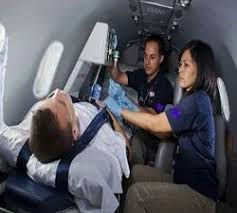
Advanced heart failure can significantly affect a person’s ability to carry out everyday activities. Patients may experience breathlessness, fatigue, fluid retention, and reduced physical endurance. For those receiving treatment away from home, returning to their home country or travelling to another destination for continued care can require careful medical planning.
International travel can place additional demands on the cardiovascular system, particularly during prolonged flights and airport transfers. Patients may need assistance with mobility, medication routines, medical documentation, and other travel-related requirements.
An international medical escort may provide practical support for patients who are medically stable and have been cleared for commercial air travel. The decision to travel must always be based on an individual assessment by the treating cardiology team.
Understanding Advanced Heart Failure and Its Impact on Travel
Heart failure is a condition in which the heart cannot pump blood effectively enough to meet the body’s needs. It may develop due to coronary artery disease, high blood pressure, heart valve problems, or other cardiac conditions.
Patients with advanced heart failure may experience:
Breathlessness during physical activity or while resting
Persistent tiredness and weakness
Swelling in the legs, ankles, or abdomen
Reduced exercise tolerance
Difficulty sleeping comfortably
Fluid retention
Irregular heartbeat
Frequent hospital admissions
These symptoms can make long-distance travel challenging. Changes in cabin pressure, limited movement, prolonged sitting, and the physical demands of airport procedures may require additional consideration.
Why Medical Escort Support May Be Beneficial
Patients with advanced heart failure may require assistance throughout an international journey, especially when mobility and daily activities are affected.
For patients who are medically stable and approved for commercial air travel, a medical escort may provide agreed assistance such as:
Supporting airport check-in and boarding.
Helping with wheelchair transfers and mobility.
Assisting with prescribed medication routines within the agreed professional scope.
Helping organise access to medical documents.
Coordinating communication with family members and relevant travel personnel.
Providing general assistance during the journey.
Supporting the agreed travel plan according to the patient’s needs.
The level of assistance depends on the patient’s condition, escort qualifications, airline requirements, and agreed service.
A medical escort does not replace cardiology treatment, hospital-level monitoring, specialist supervision, or air ambulance transport when these are medically necessary.
7 Important Tips Before Flying with Advanced Heart Failure
1. Obtain Clearance from a Cardiologist
Before booking an international flight, consult the patient’s treating cardiologist.
The specialist should assess whether the patient’s heart condition is stable enough for the proposed journey.
The assessment may consider:
Current heart failure symptoms
Blood pressure and heart rate
Recent hospital admissions
Heart function and relevant investigation results
Fluid balance
Kidney function
Current medication requirements
Ability to tolerate prolonged travel
Patients experiencing worsening heart failure symptoms may require further treatment rather than commercial air travel.
2. Review Fluid Retention and Breathing Difficulties
Fluid accumulation can cause swelling and breathlessness in patients with heart failure.
Before travelling, the treating team should review whether fluid retention is adequately managed and whether the patient can breathe comfortably during the expected journey.
Families should report symptoms such as:
Increasing breathlessness
Rapidly worsening leg or abdominal swelling
Sudden weight gain associated with fluid retention
Difficulty breathing while lying down
New or worsening chest discomfort
These symptoms require medical assessment before travel is considered.
3. Prepare a Medication Management Plan
Patients with advanced heart failure may take several medications to manage symptoms and support cardiac function.
Before departure:
Prepare an updated medication list.
Carry prescribed medicines in hand luggage.
Keep prescriptions and medical records accessible.
Ensure sufficient supplies are available for the journey and possible delays.
Follow the prescribed medication schedule.
Discuss time-zone differences with the treating medical team.
Some medications may require monitoring of blood pressure, kidney function, or electrolyte levels. Families should follow the specialist’s instructions.
Medication doses should never be changed independently to accommodate travel.
4. Assess Oxygen and Respiratory Requirements
Some patients with advanced heart failure may also experience respiratory difficulties or require supplemental oxygen.
The treating specialist should determine whether oxygen is necessary during the flight.
If oxygen is required, families should:
Obtain the appropriate medical instructions.
Contact the airline in advance.
Confirm permitted oxygen equipment.
Complete any required medical forms.
Check battery and equipment requirements.
Plan for sufficient supplies during possible travel delays.
Do not assume that oxygen will automatically be available on board.
5. Arrange Mobility and Airport Assistance
Advanced heart failure can reduce physical endurance and make walking through large airports difficult.
Wheelchair assistance may help patients conserve energy and reduce unnecessary physical exertion.
Families should consider:
Airport wheelchair assistance
Support with boarding and transfers
Suitable seating arrangements
Additional time for airport procedures
Assistance with cabin baggage
A manageable travel itinerary
A medical escort may provide agreed mobility and travel assistance according to the patient’s condition.
6. Carry Complete Medical Documentation
Medical records are important when arranging international travel after cardiac treatment.
Families should prepare:
Hospital discharge summary
Heart failure diagnosis and treatment history
Recent cardiac investigation reports
Current medication list
Details of any implanted cardiac devices
Oxygen prescription, if applicable
Treating cardiologist’s travel recommendations
Emergency contact details
Airline medical clearance documents, where required
Patients with pacemakers, implantable cardioverter-defibrillators, or other cardiac devices should carry relevant device information and follow specialist and airport security guidance.
7. Choose the Appropriate Level of Medical Transport
Not every patient with advanced heart failure requires the same level of travel assistance.
Some medically stable patients may be suitable for commercial flights with an appropriate medical escort. Others may require more extensive clinical support.
The treating cardiologist should determine whether the patient’s condition is compatible with commercial air travel.
Patients who are unstable, experiencing severe symptoms, or requiring continuous advanced monitoring may need specialised medical transport rather than an ordinary commercial flight.
Managing Comfort During a Long-Distance Flight
Even after receiving medical clearance, a long-distance journey can be tiring for someone living with advanced heart failure.
Depending on the treating specialist’s recommendations, families may consider:
Selecting suitable seating based on mobility and comfort.
Arranging wheelchair assistance at the airport.
Keeping prescribed medication accessible.
Confirming oxygen arrangements, where required.
Following medical instructions regarding fluid and dietary intake.
Discussing safe movement during the journey with the treating team.
Allowing sufficient time for boarding and transfers.
Patients should not independently increase or restrict fluid intake during travel. Any fluid restrictions should follow their individual medical plan.
What Families Should Consider Before Booking
Planning international travel for a patient with advanced heart failure involves several medical and practical decisions.
Before confirming a flight, families should consider:
Has the cardiologist confirmed that the patient is fit to fly?
Are heart failure symptoms stable?
Is fluid retention adequately managed?
Does the patient require oxygen?
Are prescribed medications available for the entire journey?
Does the patient need wheelchair assistance?
Are there any implanted cardiac devices requiring documentation?
Is the destination prepared for continued cardiac care?
Is a medical escort sufficient for the patient’s needs?
Discussing these details early can help families choose a suitable travel arrangement.
When Should Travel Be Postponed?
Travel should be postponed if the patient develops worsening breathlessness, chest pain, fainting, rapidly increasing swelling, severe weakness, or a sudden deterioration in their condition.
These symptoms may indicate worsening heart failure or another serious cardiac problem and require prompt medical assessment.
Patients who need urgent cardiac treatment, hospital-level monitoring, or advanced cardiovascular support should not be transported on an ordinary commercial flight with a standard medical escort.
How MedEscort International Can Help
MedEscort International provides medical escort assistance for patients who require support during planned journeys, including international travel and medical repatriation.
For patients with advanced heart failure who have been assessed as medically suitable for commercial air travel, an escort service may help coordinate practical travel arrangements and provide agreed assistance during the journey.
Support can be discussed according to the patient’s mobility, medication routines, oxygen requirements, medical documentation, and travel route.
Every journey requires an individual assessment. Medical escort assistance does not replace cardiology treatment, hospital-level monitoring, specialist supervision, or air ambulance services when these are medically necessary.
Contact MedEscort International
If your family is planning international travel for someone living with advanced heart failure, contact MedEscort International to discuss the journey and the assistance that may be appropriate.
Phone: +91 9774900430
Email: alan@medescortinternational.com
Website: medescortinternational.com
Frequently Asked Questions
1. Can patients with advanced heart failure travel by aeroplane?
Some patients may be able to fly if their condition is stable and their treating cardiologist confirms that commercial air travel is appropriate. The decision depends on symptoms, heart function, and ongoing treatment needs.
2. How long should patients wait before flying after heart failure treatment?
There is no single waiting period suitable for every patient. The timing depends on the severity of heart failure, treatment response, complications, and the cardiologist’s assessment.
3. Do patients with heart failure need oxygen during flights?
Not every patient requires oxygen. Those with respiratory difficulties or reduced oxygen levels should have their requirements assessed by their treating specialist before travelling.
4. Can a medical escort accompany a patient with advanced heart failure?
A medical escort may accompany a patient who has been assessed as suitable for commercial air travel. The level of support depends on the patient’s medical needs and the escort’s qualifications.
5. What medicines should heart failure patients carry during international travel?
Patients should carry all prescribed medicines, an updated medication list, and relevant prescriptions. Medicines should remain accessible in hand luggage throughout the journey.
6. Can patients with pacemakers travel internationally?
Many patients with pacemakers can travel by air, but they should follow their cardiologist’s advice and carry their device identification information. Airport security procedures should be discussed with the relevant medical team.
7. Can MedEscort International assist with medical repatriation for heart failure patients?
MedEscort International can discuss medical escort assistance for suitable commercial air travel and planned repatriation journeys. The patient’s cardiac stability, care requirements, route, and airline approval must be assessed before arrangements are confirmed.
Final Thoughts
Advanced heart failure can make international travel challenging because of breathlessness, fluid retention, reduced physical endurance, and ongoing medication requirements.
Careful preparation and specialist clearance are essential before arranging a long-distance journey. Families should work closely with the treating cardiologist to determine whether the patient is stable enough to fly and what assistance may be required.
For patients who are medically cleared for commercial air travel but need additional support, an international medical escort may help make the journey more organised and manageable.
Medical Disclaimer
This article is intended for general informational purposes only and does not constitute medical advice. Advanced heart failure can cause serious and potentially life-threatening complications. Patients must receive an individual assessment from their treating cardiologist before air travel. Medical stability, fluid status, oxygen requirements, ongoing treatment, airline approval, and the appropriate level of transport support must be assessed individually.