


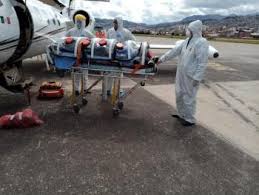
International air travel can present additional challenges for people living with pulmonary fibrosis, particularly when breathing capacity is reduced or oxygen support is required. Pulmonary fibrosis is a lung condition in which lung tissue becomes scarred and stiff, making it harder for the lungs to transfer oxygen into the bloodstream.
Some patients need to travel internationally to return home after treatment, continue medical care, or reunite with family. For patients whose condition is stable and who have received appropriate medical clearance, an international medical escort may provide assistance during a commercial flight.
However, flying with pulmonary fibrosis requires careful preparation. Cabin pressure, reduced oxygen availability, prolonged sitting, and airport transfers may place additional demands on the respiratory system. A treating respiratory specialist should assess the patient’s fitness to fly before any arrangements are confirmed.
Understanding Pulmonary Fibrosis and Its Impact on International Travel
Pulmonary fibrosis causes scarring of lung tissue. As the condition progresses, the lungs may become less flexible, making breathing more difficult. Symptoms can include:
Shortness of breath, particularly during physical activity.
Persistent dry cough.
Fatigue and reduced stamina.
Difficulty walking longer distances.
Low oxygen levels.
Reduced ability to perform everyday activities.
Long-distance air travel may be challenging because commercial aircraft cabins are pressurised to conditions equivalent to a high-altitude environment. This means oxygen levels available to passengers are lower than at sea level.
For someone with pulmonary fibrosis, this may lead to increased breathlessness or reduced oxygen saturation during the flight.
Other travel considerations include:
Oxygen requirements: Some patients need supplemental oxygen during flights.
Physical exertion: Walking through airports and boarding aircraft may increase breathlessness.
Extended sitting: Remaining seated for several hours can cause discomfort and reduce mobility.
Medication management: Regular respiratory medication must remain accessible.
Fatigue: Long journeys and connecting flights may be physically demanding.
Emergency planning: Families should understand what to do if breathing symptoms worsen.
Why Medical Escort Support May Be Beneficial
Some patients with pulmonary fibrosis can travel independently after receiving medical clearance. Others may require additional assistance because of breathlessness, limited mobility, oxygen requirements, or general weakness.
Depending on the agreed service and the escort’s professional qualifications, support may include:
Assisting with airport check-in, security, and boarding.
Coordinating wheelchair assistance where necessary.
Helping organise approved in-flight oxygen arrangements.
Supporting prescribed medication routines.
Monitoring the patient’s comfort and observable condition within the escort’s professional scope.
Communicating assistance requirements to airline staff.
Coordinating arrival arrangements with family members or caregivers.
A medical escort does not replace specialist respiratory care or hospital-level monitoring. Patients who require continuous advanced respiratory support may need a different level of medical transport.
7 Essential Tips for Preparing a Patient with Pulmonary Fibrosis for International Travel
1. Obtain a Respiratory Assessment Before Booking
The first step is to consult the patient’s pulmonologist or respiratory specialist.
The assessment should consider:
The severity and progression of pulmonary fibrosis.
Current breathing difficulties.
Resting and exertional oxygen saturation.
Whether supplemental oxygen is required.
Recent respiratory infections or hospital admissions.
Existing heart or lung complications.
The length of the flight and any connecting journeys.
Some patients may need a hypoxic challenge test or other specialist assessment to determine whether additional oxygen will be required during the flight.
The treating clinician should provide individual advice about fitness to fly. Families should not rely only on how the patient feels while resting at home.
2. Arrange In-Flight Oxygen if Required
Some people with pulmonary fibrosis need supplemental oxygen during air travel. However, not every oxygen device is approved for use on commercial aircraft.
Before departure:
Ask the respiratory specialist whether oxygen is required during the flight.
Obtain the prescribed oxygen flow rate and delivery instructions.
Contact the airline well in advance.
Confirm whether an approved portable oxygen concentrator is required.
Check battery requirements and permitted equipment.
Confirm arrangements for connecting flights and ground transfers.
Airline oxygen policies vary. Families should obtain written confirmation of the arrangements before travelling.
A medical escort may help coordinate approved oxygen arrangements, but should not independently determine the patient’s oxygen prescription.
3. Plan Airport Mobility Assistance
Pulmonary fibrosis can make walking long distances difficult. Large airports may involve extended walking, queues, security checks, and multiple boarding procedures.
Consider arranging:
Wheelchair assistance at departure and arrival airports.
Assistance during connecting flights.
Additional time for security and boarding.
Support with luggage.
Seating near boarding gates where available.
Assistance during transfers between terminals.
Families should communicate the patient’s mobility and respiratory needs to the airline before departure.
4. Organise Respiratory Medication and Medical Records
Patients should keep their prescribed respiratory medication accessible throughout the journey.
Before travelling:
Prepare an updated medication list.
Carry essential medicines in hand luggage where permitted.
Keep prescriptions and medical letters accessible.
Check storage requirements for medicines.
Confirm whether inhalers or nebuliser equipment can be carried.
Discuss medication timing with the treating clinician.
Useful medical documents include:
A recent respiratory specialist’s report.
Pulmonary function test results, if relevant.
Oxygen prescription and equipment details.
Current medication list.
Allergy information.
Recent hospital discharge summary, if applicable.
Treating physician contact details.
Medical fitness-to-fly documentation if requested.
These documents may help airline staff and healthcare professionals understand the patient’s requirements.
5. Prepare for Fatigue and Breathing Difficulties
Patients with pulmonary fibrosis may experience fatigue even after relatively minor physical activity. Long airport transfers and extended travel periods can increase exhaustion.
Families should plan for:
Adequate rest before departure.
Wheelchair assistance where needed.
Comfortable clothing.
Avoiding unnecessary rushing through airports.
Appropriate seating during transfers.
Rest periods after arrival.
Patients should follow their clinician’s advice about activity and energy conservation.
If breathlessness becomes significantly worse than usual, the patient should receive medical assessment before continuing the journey.
6. Check the Aircraft and Airline Requirements
Not all aircraft and airlines have identical medical assistance policies. Oxygen equipment, battery limits, medical forms, and approval procedures can vary.
Before confirming the flight, ask the airline:
Whether the patient’s oxygen equipment is permitted.
Whether advance medical approval is required.
Which medical forms must be completed.
Whether a specific portable oxygen concentrator is accepted.
Whether additional batteries are required.
Whether wheelchair assistance is available.
What arrangements apply during connecting flights.
Do not assume that an oxygen device approved by one airline will automatically be accepted by another.
7. Arrange Arrival and Follow-Up Care
Patients with pulmonary fibrosis may need assistance after landing, especially if they use oxygen or have limited walking capacity.
Before departure, confirm:
Who will meet the patient at the destination airport.
Whether wheelchair assistance is arranged.
Whether oxygen equipment is available for the onward journey.
How the patient will travel to their final destination.
Whether prescribed medication is available.
Whether follow-up with a respiratory specialist has been arranged.
If the patient is returning home after hospital treatment, coordinating with the receiving healthcare team can help support continuity of care.
Managing Comfort and Breathing During a Long Flight
Patients with pulmonary fibrosis should follow an individual travel plan prepared with their respiratory specialist.
The following considerations may help:
Follow the oxygen prescription: Use supplemental oxygen exactly as prescribed and according to airline-approved arrangements.
Keep medication accessible: Essential respiratory medication should be available during the journey.
Avoid unnecessary exertion: Use airport assistance and allow sufficient time for transfers.
Choose suitable seating: Consider mobility, comfort, and access to assistance when selecting a seat.
Follow hydration advice: Maintain appropriate fluid intake according to the treating clinician’s recommendations.
Monitor symptoms: Report worsening breathlessness, chest discomfort, or unusual weakness promptly.
Communicate with cabin crew: Make sure relevant assistance requirements are understood.
These measures can support travel preparation but cannot eliminate the risks associated with advanced respiratory disease.
What Families Should Consider Before Booking
Before arranging international travel for someone with pulmonary fibrosis, families should consider:
Has the respiratory specialist confirmed that the patient is fit to fly?
Does the patient require supplemental oxygen?
Has in-flight oxygen been assessed and arranged?
Is the oxygen equipment approved by the airline?
Can the patient walk independently?
Is wheelchair assistance required?
Are respiratory medications and prescriptions organised?
Does the patient have other heart or lung conditions?
Are connecting flights suitable?
Is appropriate medical follow-up available after arrival?
Would a medical escort be suitable, or is a higher level of medical transport necessary?
Discussing these questions early can help families make informed travel decisions.
When Should Travel Be Postponed?
Travel may need to be postponed if the patient’s respiratory condition is unstable or symptoms have recently worsened.
Medical assessment is particularly important if the patient has:
Severe or rapidly worsening breathlessness.
A recent respiratory infection.
New or unexplained chest pain.
Uncontrolled low oxygen levels.
Recent hospitalisation for respiratory deterioration.
Fever or significant coughing with worsening symptoms.
A new requirement for oxygen that has not been assessed for air travel.
Severe breathing difficulty, chest pain, blue or grey lips, or sudden confusion requires urgent medical attention.
The treating respiratory specialist must determine whether the patient is fit to fly. A medical escort cannot make an unstable patient medically suitable for commercial air travel.
How MedEscort International Can Help
MedEscort International supports patients and families who require assistance coordinating international medical travel. For suitable patients with pulmonary fibrosis, a medical escort may help manage the practical demands of the journey according to the patient’s medical needs and the agreed service.
Support may include:
Discussing the patient’s travel and assistance requirements with family members.
Coordinating airport assistance and boarding arrangements.
Helping organise medical documentation.
Coordinating airline-approved oxygen arrangements where applicable.
Supporting prescribed medication routines.
Assisting with airport navigation and transfers.
Coordinating arrival arrangements with the receiving caregiver.
Providing escort assistance within the agreed professional scope.
Every case requires individual assessment. Suitability depends on respiratory stability, oxygen requirements, mobility, escort qualifications, airline approval, and the proposed route.
Contact MedEscort International
Phone: +91 9774900430
Website: medescortinternational.com
Contact MedEscort International to discuss the patient’s circumstances and explore suitable international travel arrangements.
Frequently Asked Questions
1. Can a person with pulmonary fibrosis travel internationally by plane?
Some patients with stable pulmonary fibrosis may be able to travel by air after receiving specialist medical clearance. Suitability depends on lung function, oxygen requirements, symptoms, and the proposed journey.
2. Do pulmonary fibrosis patients need oxygen during flights?
Some patients require supplemental oxygen because aircraft cabins have lower oxygen pressure than conditions at sea level. A respiratory specialist should assess the patient’s needs before travel.
3. Can patients use their own oxygen concentrator on an aircraft?
Some portable oxygen concentrators are approved for use on commercial aircraft. Passengers should confirm the specific device, battery requirements, and airline approval before departure.
4. What documents should a pulmonary fibrosis patient carry?
Patients should consider carrying a recent medical summary, respiratory specialist’s report, medication list, oxygen prescription, equipment details, prescriptions, and emergency contact information.
5. Is wheelchair assistance available for patients with pulmonary fibrosis?
Airlines and airports commonly offer assistance for passengers with reduced mobility. Families should request the service in advance and explain any respiratory or oxygen-related requirements.
6. Can a medical escort travel with a patient who uses oxygen?
A medical escort may accompany a suitable patient when the oxygen requirements and airline arrangements have been assessed and approved. The escort’s ability to provide support depends on professional qualifications and the agreed service.
7. Can MedEscort International assist with medical repatriation for pulmonary fibrosis patients?
MedEscort International can discuss the patient’s medical condition and proposed route to assess whether its medical escort service may be suitable. Arrangements depend on respiratory stability, oxygen needs, airline policies, and the level of care required.
Final Thoughts
International travel with pulmonary fibrosis requires careful planning around breathing capacity, oxygen requirements, medication, mobility, and airline procedures. Obtaining specialist medical clearance and arranging suitable assistance before departure can help families make informed decisions.
For patients who have been assessed as fit to fly but need additional assistance, an international medical escort may help coordinate the practical aspects of a long-distance journey. The priority should always be the patient’s respiratory safety and access to appropriate medical care.
Medical Disclaimer: This article is intended for general informational purposes only and does not replace professional medical advice, diagnosis, or treatment. Patients with pulmonary fibrosis should consult their treating respiratory specialist before making international travel arrangements.