


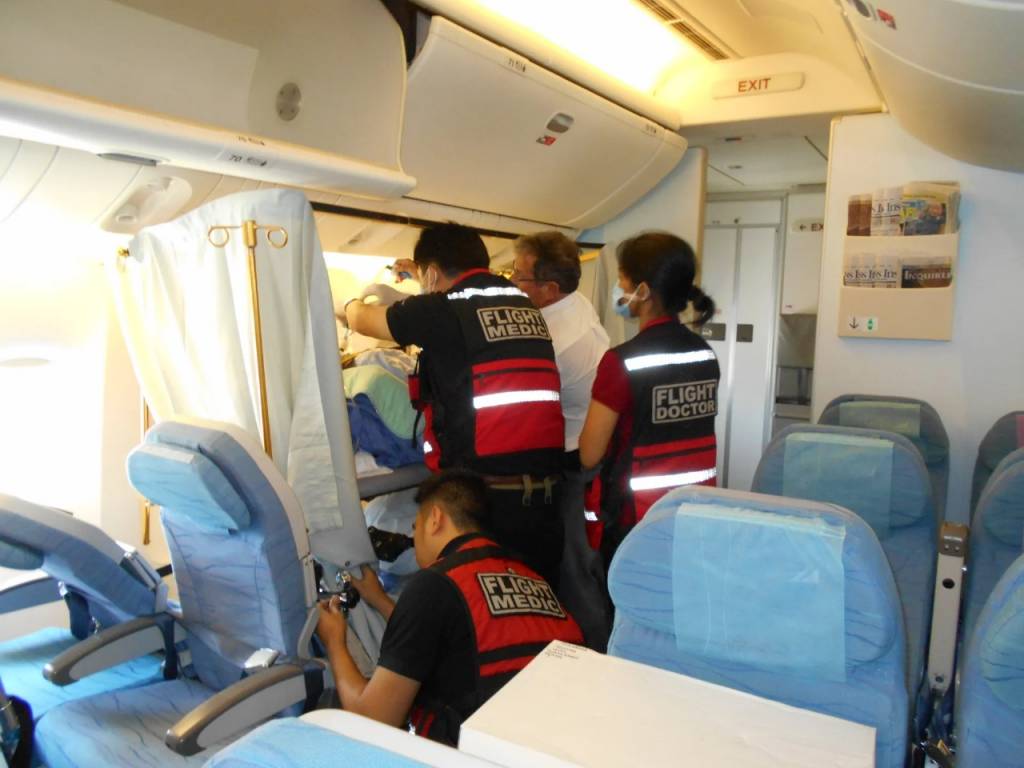
Travelling by commercial aircraft is generally routine for many passengers, but becoming unwell during a flight can create a challenging situation. For patients with existing medical conditions, recent hospitalisation or ongoing treatment, understanding the available onboard assistance is particularly important.
A medical emergency during a flight may involve anything from sudden dizziness or breathing difficulties to a more serious health event. Cabin crew are trained to respond to onboard emergencies, and airlines have procedures for requesting additional medical assistance when necessary.
For patients travelling with a medical escort, an agreed support plan may provide an additional layer of assistance during the journey. However, the level of care available depends on the escort’s qualifications, the patient’s condition and the facilities available onboard.
Here are eight important things patients and families should understand before arranging an international flight.
1. What Happens When a Passenger Becomes Unwell During a Flight?
When a passenger reports feeling unwell, cabin crew follow the airline’s onboard procedures.
Depending on the situation, they may:
Assess the immediate situation within their training.
Provide first aid within their training and available resources.
Request assistance from medically qualified passengers.
Contact ground-based medical support where available.
Inform the flight captain about the situation.
Consider whether further action, including a diversion, is necessary.
The response depends on the nature and seriousness of the medical problem.
Not every medical incident requires an emergency landing. The flight captain and relevant medical support personnel consider the circumstances before deciding what action is appropriate.
2. What Medical Assistance Is Available on Commercial Aircraft?
Commercial aircraft generally carry basic medical equipment and emergency supplies according to applicable aviation requirements and airline policies.
Depending on the airline and aircraft, available resources may include:
First-aid kits.
Emergency medical kits.
Automated external defibrillators (AEDs).
Basic oxygen equipment.
Communication access to ground-based medical support.
The equipment available varies between airlines and aircraft.
Passengers should not assume that a commercial aircraft has the same facilities as a hospital or intensive care unit. Patients requiring specialised monitoring or advanced medical intervention need an appropriate medical transport assessment before departure.
3. Can Cabin Crew Provide Medical Treatment?
Cabin crew receive training to respond to onboard emergencies, including first aid and the use of certain emergency equipment.
However, cabin crew are not a replacement for a doctor or specialist medical team.
Their responsibilities generally include:
Recognising and reporting emergencies.
Following airline emergency procedures.
Providing assistance within their training.
Coordinating access to available medical equipment.
Communicating with the flight captain and relevant medical support.
If a passenger requires clinical intervention beyond the crew’s training, additional medical assistance may be requested where available.
4. Can a Medical Escort Help During an In-Flight Emergency?
A medical escort may provide assistance if a patient becomes unwell during a flight, depending on the escort’s professional qualifications and the agreed responsibilities.
Before travel, the escort arrangement should take into account the patient’s medical history, expected needs and potential risks.
Depending on the professional scope and available resources, an escort may:
Observe the patient’s general condition.
Recognise changes that require attention.
Follow the agreed care plan.
Communicate with cabin crew.
Assist within their professional qualifications.
Share relevant information with the appropriate medical personnel.
A medical escort does not have independent control over aircraft operations or airline emergency decisions.
If a patient’s condition requires continuous advanced medical support, a commercial flight with an escort may not be an appropriate option.
5. Can a Commercial Flight Be Diverted Because of a Medical Emergency?
Yes. A flight may be diverted when the circumstances indicate that landing at another airport is necessary.
The decision involves several considerations, including:
The passenger’s medical condition.
Advice from available medical support.
Distance to suitable airports.
Weather conditions.
Aircraft operational requirements.
The captain’s assessment.
A diversion can help a passenger receive medical attention sooner when necessary, but it can also affect other passengers and connecting travel arrangements.
The decision is made by the flight captain in accordance with operational procedures and the information available.
6. How Can Patients With Existing Medical Conditions Prepare?
Passengers with known medical conditions should plan ahead rather than rely entirely on emergency assistance.
Before booking, consider the following:
Discuss fitness to fly with the treating clinician.
Review possible risks associated with the journey.
Confirm whether supplementary oxygen or approved equipment is required.
Keep essential medication accessible.
Carry relevant medical documents.
Inform the airline about any assistance requirements.
Consider whether a medical escort is appropriate.
Patients should follow their clinician’s advice and avoid changing medication or treatment arrangements without professional guidance.
7. Why Is Medical Planning Important for Long-Haul Flights?
Long-haul flights involve extended periods of sitting, changes in cabin pressure and limited access to healthcare facilities.
For some patients, these conditions may create additional challenges.
Important considerations include:
| Travel Factor | Why It Matters |
|---|---|
| Flight duration | Longer journeys may require additional planning |
| Mobility | Limited movement may affect comfort and health risks |
| Medication schedule | Time-zone changes can affect medication timing |
| Oxygen requirements | Equipment and airline approval may be necessary |
| Connecting flights | Transfers can add physical and logistical demands |
| Medical history | Existing conditions may influence fitness to fly |
A medical assessment should consider the complete journey, including airport waiting time and connecting flights, rather than only the time spent in the aircraft.
8. When Should Patients Consider an Air Ambulance Instead?
A commercial flight may not be suitable for every patient, even when a medical escort is available.
An air ambulance or another specialised medical transport option may be considered when the patient requires a level of care that cannot be safely provided during ordinary commercial air travel.
This may include situations involving:
Unstable medical conditions.
Continuous advanced monitoring.
Complex respiratory support.
Intensive care requirements.
Significant risk of deterioration during travel.
Specialised medical equipment and clinical support.
The treating medical team should assess the patient and recommend an appropriate transport option.
How to Reduce the Risk of Travel Complications
Although no preparation can eliminate every risk, organised planning can help identify potential problems before departure.
Arrange a medical review: Discuss the proposed journey with the treating clinician.
Confirm fitness to fly: Obtain medical advice based on the patient’s current condition.
Prepare medical records: Carry relevant reports, prescriptions and discharge summaries.
Check airline requirements: Confirm medical clearance and assistance procedures.
Plan medication: Keep prescribed medicines accessible and follow the clinician’s instructions.
Review equipment needs: Obtain approval for oxygen or other medical devices.
Consider medical escort support: Discuss whether professional assistance is appropriate.
Prepare an emergency plan: Make sure relevant contacts and medical information are available.
Frequently Asked Questions
1. What happens if someone has a medical emergency on a plane?
Cabin crew follow airline emergency procedures, provide assistance within their training and may request help from medically qualified passengers or ground-based medical support.
2. Do commercial aircraft have doctors onboard?
There is no guarantee that a doctor will be travelling on every flight. Cabin crew may request assistance from medically qualified passengers when an emergency occurs.
3. Can a medical escort treat a patient during a flight?
A medical escort may provide assistance within their professional qualifications and agreed responsibilities. The available equipment and facilities on a commercial aircraft remain limited.
4. Can an aircraft make an emergency landing because of a passenger?
Yes. The flight captain may decide to divert the aircraft if a passenger’s medical condition requires urgent attention and diversion is considered appropriate.
5. Are medical emergencies common on long-haul flights?
Medical incidents can occur on both short-haul and long-haul flights. Individual risk varies according to passenger health, medical history and other factors.
6. Should a patient with a medical condition travel without an escort?
Some medically stable patients can travel independently. Others may benefit from additional assistance. The decision should consider the patient’s condition, mobility and ability to manage the journey.
7. Can a medical escort prevent an emergency during a flight?
No. A medical escort cannot guarantee that an emergency will not occur. Their role is to provide the agreed support and respond within their professional scope if assistance is needed.
8. What if a patient needs hospital treatment immediately after landing?
The receiving hospital or healthcare provider should be informed in advance where possible. Ground transportation and handover arrangements can be coordinated according to the patient’s condition.
Plan Your International Journey With MedEscort International
For patients with existing medical conditions, international air travel requires careful preparation. Understanding the patient’s medical needs, airline procedures and appropriate transport options can help families make informed decisions.
MedEscort International can be contacted to discuss international medical escort arrangements for patients who require assistance during commercial air travel.
Each journey should be considered individually, based on the patient’s medical condition, travel route and required level of support.
Website:MedEscort International
Phone: +91 9774900430
Email:alan@medescortinternational.com
Planning an international flight for a patient with medical needs? Contact MedEscort International to discuss suitable travel arrangements.