


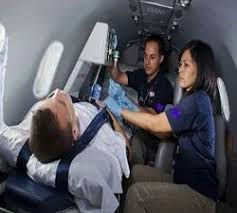
Travelling internationally after a stroke can be challenging for patients and their families. Stroke recovery may involve changes in mobility, balance, speech, strength, memory or the ability to perform everyday activities independently. Even when a patient is medically stable, navigating airports and managing a long flight may require additional assistance.
A medical escort for stroke patients may help make international travel more manageable by accompanying the patient and providing agreed assistance throughout the journey. The level of support depends on the patient’s medical condition, mobility, professional requirements and the services arranged in advance.
However, flying after a stroke requires individual medical assessment. The treating neurologist or physician should determine whether the patient is fit to travel and whether commercial air travel is appropriate.
1. Can a Stroke Patient Travel by Air?
Some stroke patients may be able to travel by commercial aircraft once their condition is stable and their treating medical team considers flying appropriate. The timing of travel depends on the type of stroke, severity, recovery progress and risk of complications.
Before booking a flight, the treating clinician may assess:
- The patient’s medical stability.
- Recent symptoms and recovery progress.
- Mobility and ability to sit for an extended period.
- Risk of another medical event.
- Swallowing or breathing difficulties.
- Medication requirements.
- Need for wheelchair assistance or additional support.
There is no single waiting period that applies to every stroke patient. The decision should be based on the patient’s individual condition and medical advice.
2. Why Might a Stroke Patient Need a Medical Escort?
After a stroke, some patients experience physical or cognitive difficulties that make independent travel complicated. Even patients who can walk short distances may struggle with airport queues, boarding procedures, luggage or long periods of sitting.
A medical escort may be helpful when the patient:
- Has reduced mobility or muscle weakness.
- Needs wheelchair assistance at airports.
- Experiences fatigue during prolonged travel.
- Has difficulty communicating.
- Needs help navigating airport procedures.
- Is travelling without family support.
- Requires agreed assistance during the journey.
A medical escort can provide support according to their professional qualifications and the responsibilities agreed before departure.
3. What Challenges Can Stroke Patients Face During International Flights?
Stroke recovery varies significantly from one patient to another. Some patients may experience difficulties that become more noticeable during a long journey.
| Challenge | Travel Consideration |
|---|---|
| Muscle weakness | May make walking, transfers or boarding difficult. |
| Balance problems | May increase difficulty moving through crowded airport areas. |
| Speech difficulties | May affect communication with airline staff. |
| Fatigue | May make long airport waits and flights tiring. |
| Cognitive changes | May require assistance with instructions and travel procedures. |
| Reduced mobility | May require wheelchair services or suitable assistance. |
Understanding these challenges in advance helps families make suitable arrangements instead of relying on last-minute assistance.
4. How Can a Medical Escort Assist During Airport Procedures?
Airports can be overwhelming for patients recovering from a stroke. Large terminals, security procedures, long walking distances and multiple announcements can make travel more demanding.
Depending on the agreed service, a medical escort may assist with:
- Coordinating airport wheelchair assistance.
- Helping the patient navigate the terminal.
- Supporting communication with airline personnel.
- Managing travel documents and medical paperwork.
- Coordinating boarding arrangements.
- Helping the patient remain comfortable while waiting.
Airport wheelchair assistance should be requested in advance through the airline, as arrangements and availability may vary.
5. What Medical Documents Should Stroke Patients Carry?
Keeping medical information organised is important when travelling internationally after a stroke. Relevant documents can help airline personnel and healthcare providers understand the patient’s condition and travel requirements.
| Document | Purpose |
|---|---|
| Medical summary | Provides details of the stroke and current condition. |
| Hospital discharge summary | Records treatment and hospital care. |
| Fit-to-fly assessment | Provides medical advice regarding air travel. |
| Medication list | Identifies current prescriptions and dosage instructions. |
| Medical investigation reports | Contains relevant scan or test information, where appropriate. |
| Airline medical forms | Supports the airline’s medical clearance process, if required. |
| Emergency contacts | Helps coordinate communication if assistance is needed. |
Families should confirm whether the airline requires specific medical forms or additional approval before departure.
6. What Should Families Plan Before Booking a Flight?
Preparing for an international journey after a stroke involves more than selecting a flight. The complete travel route, including road transfers, airport waiting time, connecting flights and arrival arrangements, should be considered.
Families should plan for the following:
- Medical clearance: Consult the treating neurologist or physician about fitness to fly.
- Flight selection: Consider direct flights or routes with fewer connections where practical.
- Mobility assistance: Request wheelchair services or other support in advance.
- Medication planning: Carry prescribed medicines in accessible hand luggage.
- Airport timing: Allow sufficient time for check-in, security and boarding.
- Medical escort: Confirm the escort’s role, qualifications and agreed responsibilities.
- Destination arrangements: Organise transport and assistance after arrival.
These arrangements may reduce unnecessary stress and help the patient travel at a more comfortable pace.
7. Can a Medical Escort Help With Medication and Patient Comfort?
Some stroke patients may need to follow medication schedules or require assistance with routine needs during a long flight. A medical escort may provide agreed support within their professional scope.
Depending on the patient’s requirements and the escort’s qualifications, support may include:
- Helping follow an agreed medication schedule.
- Assisting with movement or repositioning when appropriate.
- Observing the patient’s general condition.
- Helping the patient communicate requests.
- Coordinating with cabin crew when assistance is needed.
- Providing reassurance and travel support.
Medication should always be managed according to the treating clinician’s instructions. A medical escort on a commercial flight does not provide hospital-level care or guarantee that medical complications will not occur.
8. When Is an Air Ambulance More Appropriate for a Stroke Patient?
A commercial flight with a medical escort may be an option for some medically stable stroke patients. However, patients requiring a higher level of medical care during transport may need a specialised medical transfer.
An air ambulance may be considered when the patient requires:
- Continuous advanced medical monitoring.
- Intensive care-level support.
- Specialised respiratory assistance.
- Medical intervention that cannot be provided on a commercial aircraft.
- A dedicated medical environment during transport.
The treating medical team should assess the patient’s condition and recommend the appropriate transport option. The decision should not be based solely on convenience, flight duration or cost.
Preparing for International Travel After a Stroke
Before arranging travel, families can use the following checklist to review the main requirements:
- Obtain medical advice and fitness-to-fly assessment.
- Confirm the patient’s current condition is stable.
- Discuss mobility, balance and communication needs.
- Collect medical reports and discharge documents.
- Prepare prescribed medication for the journey.
- Confirm airline medical requirements.
- Request wheelchair or airport assistance in advance.
- Arrange suitable ground transportation.
- Confirm the medical escort service and responsibilities.
- Plan the receiving party and transfer at the destination.
Frequently Asked Questions
1. Can a stroke patient travel internationally?
Some stroke patients can travel internationally after medical assessment. Fitness to fly depends on their condition, recovery, stability and travel requirements.
2. How soon after a stroke can someone fly?
There is no universal timeframe for every patient. The treating doctor should assess the stroke type, recovery progress and possible complications before recommending air travel.
3. Can a stroke patient travel alone on a commercial flight?
Some patients may be able to travel independently, while others may require assistance with mobility, communication or airport procedures. Individual needs should be evaluated before booking.
4. What does a medical escort do for a stroke patient?
A medical escort may accompany the patient, provide agreed assistance, support airport procedures, observe the patient’s general condition within their scope and help coordinate the journey.
5. Can stroke patients use airport wheelchair assistance?
Yes, airport wheelchair assistance may be available through airline and airport arrangements. It should be requested in advance and confirmed for the entire travel route.
6. Can a stroke patient travel with medication?
Patients should carry their prescribed medication in accessible hand luggage, along with prescriptions or supporting medical documentation where appropriate. Airline and destination-country requirements should be checked.
7. Is an air ambulance always necessary after a stroke?
No. Some medically stable patients may be suitable for commercial flights, while others require specialised medical transport. The decision depends on the level of care needed during the journey.
8. Can a medical escort guarantee a safe flight after a stroke?
No transport arrangement can guarantee a complication-free journey. A medical escort may provide agreed assistance, but travel risks and the patient’s suitability for flying must be assessed by the treating medical team.
Arrange International Medical Escort Assistance With MedEscort International
International travel following a stroke requires careful coordination of medical clearance, mobility support, airline requirements and destination arrangements. Families should evaluate the patient’s needs before booking flights or making transfer plans.
MedEscort International can be contacted to discuss international medical escort arrangements for patients who need assistance travelling by commercial aircraft.
Each enquiry should be reviewed individually, considering the patient’s medical condition, departure location, destination and required level of support.
Website: MedEscort International
Phone: +91 9774900430
Email: alan@medescortinternational.com
Planning international travel for a stroke patient? Contact MedEscort International to discuss the available medical escort arrangements.