


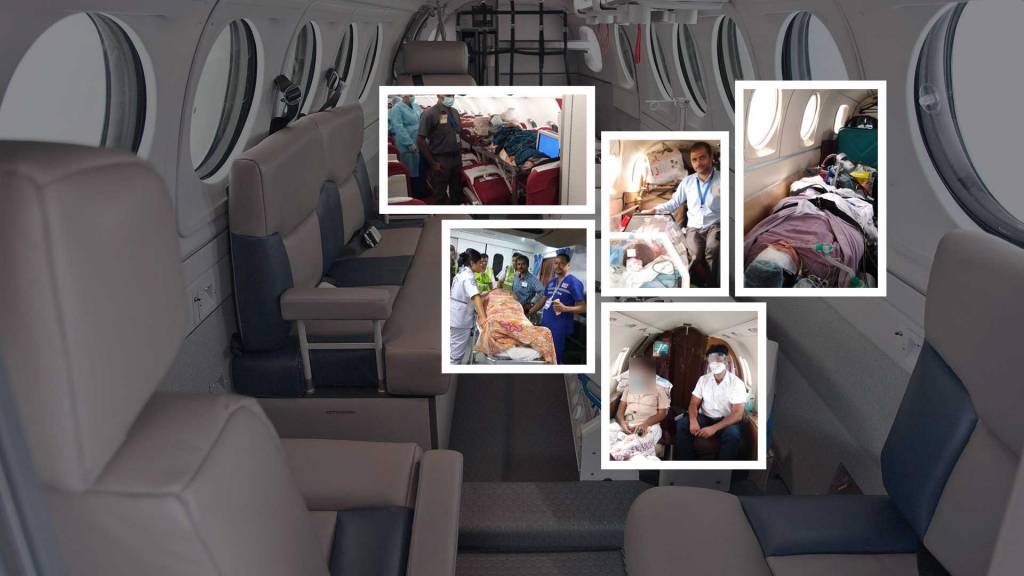
Arranging international travel for someone with medical needs involves more than booking a flight. Families may need to coordinate medical documents, airline requirements, mobility assistance, medication arrangements and transportation at both ends of the journey.
For patients who are medically suitable for commercial air travel but need additional support, an international medical escort may help make the journey more manageable.
But how does the process actually work? What information is required before booking? Who coordinates with the airline, and what happens on the day of travel?
This guide explains the international medical escort process in seven steps, helping families understand what to expect when arranging patient transportation.
What Is the International Medical Escort Process?
The international medical escort process is the series of arrangements involved in accompanying a patient during a journey, usually on a commercial airline.
It begins with understanding the patient’s medical and travel requirements. It then moves through medical assessment, service planning, flight coordination and journey preparation.
Depending on the agreed service, the escort may accompany the patient from the departure airport through the flight and arrival arrangements.
The process varies according to the patient’s condition, destination, airline policies and required level of assistance.
7 Steps in the International Medical Escort Process
Step 1: Contact the Medical Escort Provider
The first step is to contact a medical escort provider and explain the patient’s travel requirements.
Families should be prepared to share basic information, including:
Patient’s age.
Current location and destination.
Proposed travel date.
Medical condition or diagnosis.
Current mobility level.
Whether the patient can sit upright.
Whether wheelchair assistance is required.
Any known oxygen or medical equipment requirements.
Whether the patient needs assistance during the flight.
Providing accurate information helps the provider understand the journey and identify what further assessment or documentation may be required.
Step 2: Share Medical Reports and Relevant Information
The provider may request medical documents to understand the patient’s current condition and support requirements.
Depending on the circumstances, useful documents may include:
Recent medical reports.
Discharge summaries.
Current medication list.
Treating doctor’s recommendations.
Relevant investigation results.
Details of prescribed medical equipment.
Contact details of the treating healthcare team.
Medical information should be shared securely and only with the appropriate parties involved in arranging the journey.
This stage helps establish whether the proposed service may be suitable. It does not replace a formal medical assessment or the treating clinician’s decision about fitness to fly.
Step 3: Obtain a Fitness-to-Fly Assessment
Before confirming travel, the patient’s treating doctor should assess whether commercial air travel is medically appropriate.
This is an important step because a patient who can travel with assistance may have very different needs from someone who requires continuous specialist monitoring.
The assessment may consider:
Whether the medical condition is stable.
Recent surgery or hospitalisation.
Breathing and oxygen requirements.
Mobility and ability to remain seated.
Risk of complications during travel.
Medication and treatment requirements.
Whether additional medical equipment is necessary.
Some airlines also require medical clearance or specific documentation before accepting passengers with certain medical conditions.
The CDC travel health guidance provides general information about preparing for travel with health conditions.
If the patient requires hospital-level care or advanced medical support during transportation, a commercial flight with a medical escort may not be appropriate. Alternative arrangements, such as an air ambulance, may need to be considered.
Step 4: Plan the Journey and Confirm the Service
Once the patient’s requirements are understood, the provider can discuss the proposed travel arrangements.
Planning may include:
Flight arrangements: Identifying suitable flight options based on the patient’s needs and airline requirements.
Escort arrangements: Confirming the appropriate escort qualifications and agreed responsibilities.
Airport assistance: Planning wheelchair support, transfers and boarding assistance where required.
Medication arrangements: Establishing how prescribed medication will be carried and managed during the journey.
Medical equipment: Checking whether required equipment is permitted and whether airline approval is necessary.
Family communication: Establishing emergency contacts and communication arrangements.
Before proceeding, families should understand the service scope, responsibilities, costs and any exclusions.
Step 5: Coordinate with the Airline
Airline approval is an important part of many medical travel arrangements.
Depending on the patient’s condition, the airline may request medical forms, supporting documents or advance notification.
Families and the service provider should clarify:
Whether medical clearance is required.
Whether wheelchair assistance is available.
Whether prescribed oxygen or other equipment is permitted.
Whether special seating arrangements are necessary.
Whether the patient can travel with the proposed escort.
Whether additional documentation is needed.
Airline policies differ, so requirements should be confirmed directly with the operating airline.
The IATA passenger accessibility guidance offers information about accessibility considerations for air travel.
Do not assume that medical equipment or special arrangements will automatically be accepted without prior approval.
Step 6: Complete Pre-Departure Preparation
Once the arrangements are confirmed, the patient and family can prepare for the departure date.
A practical preparation checklist includes:
Keeping medical reports accessible.
Packing prescribed medication.
Carrying prescriptions and relevant documents.
Preparing permitted medical supplies.
Confirming airport assistance.
Sharing emergency contact details.
Checking baggage and equipment requirements.
Confirming the flight itinerary.
Reviewing the agreed escort responsibilities.
Families should also ensure that the receiving person or healthcare provider at the destination knows the expected arrival details.
Step 7: Escort, Arrival and Handover
On the day of travel, the medical escort meets the patient according to the agreed arrangements.
Depending on the service, support may include:
At departure: Assistance with airport navigation, check-in coordination, wheelchair arrangements and boarding.
During the flight: Agreed patient support, medication coordination and observation within the escort’s professional scope.
At arrival: Assistance with disembarking, airport navigation and coordination with the receiving party.
After arrival: A handover may be arranged with family members, ground transportation or a receiving healthcare provider.
The exact responsibilities should be agreed before departure. A medical escort does not automatically provide hospital-level treatment or replace emergency medical services.
What Information Should Families Prepare Before Booking?
Having the necessary information ready can help avoid unnecessary delays.
| Information | Why It Is Important |
|---|---|
| Medical diagnosis | Helps explain the patient’s condition |
| Recent medical reports | Supports travel planning |
| Medication list | Helps coordinate medication arrangements |
| Mobility details | Identifies assistance requirements |
| Oxygen requirements | Helps establish equipment and airline needs |
| Departure and destination | Helps plan the route |
| Preferred travel date | Supports flight coordination |
| Emergency contact details | Helps coordinate communication |
| Treating doctor’s details | Supports medical clearance and clarification |
The more accurately families describe the patient’s requirements, the easier it is to assess the appropriate transportation arrangement.
How Long Does It Take to Arrange a Medical Escort?
There is no fixed preparation time for every international medical escort journey.
The timeline depends on factors such as:
The patient’s medical condition.
Availability of medical reports.
Whether a fitness-to-fly assessment is needed.
Airline approval requirements.
Availability of suitable flights.
Escort availability.
Visa and travel documentation.
Medical equipment arrangements.
Some journeys may require additional coordination, particularly when the patient has complex medical needs or requires airline approval.
Families should contact the provider as early as possible rather than waiting until the last minute.
What Happens If the Patient Is Not Suitable for Commercial Air Travel?
Not every patient can safely travel on a regular commercial flight.
Patients who require advanced life support, continuous specialist monitoring or hospital-level care during transportation may need a different solution.
Depending on the medical assessment, an air ambulance may be considered.
The decision should be based on the patient’s clinical needs, not simply on convenience or cost.
A medical escort provider should explain the limitations of commercial travel and help families understand whether another transportation option needs to be explored.
How MedEscort International Can Help
MedEscort International supports patients and families arranging international medical travel.
The process begins by understanding the patient’s medical condition, proposed route and level of assistance required.
Depending on the patient’s condition, escort qualifications and agreed service, support may include:
Initial travel requirement discussions.
Coordination of relevant medical information.
Pre-travel planning.
Flight and airline assistance coordination.
Airport navigation and mobility assistance.
Support during boarding and transfers.
Agreed assistance during the flight.
Communication with family members.
Coordination of arrival arrangements.
Every journey is considered individually. The patient’s medical stability, treating clinician recommendations, escort qualifications, airline approval and route requirements must be assessed before travel.
Arrange an International Medical Escort
If you are planning international travel for a family member who needs medical assistance, contact MedEscort International to discuss the journey.
Phone: +91 9774900430
Email: alan@medescortinternational.com
Website: medescortinternational.com
Frequently Asked Questions
1. How does the medical escort process start?
It usually begins with contacting a medical escort provider and sharing the patient’s medical condition, travel route, proposed date and assistance requirements.
2. Do patients need medical clearance before travelling?
The treating clinician should assess the patient’s fitness to fly. The airline may also require medical forms or additional approval, depending on the patient’s condition.
3. What documents are required for international medical escort travel?
Requirements vary, but families may need medical reports, discharge summaries, medication lists, prescriptions, travel documents and airline medical forms where applicable.
4. Does the medical escort book the flight?
Flight booking responsibilities depend on the service agreement. Families should confirm whether the provider coordinates flight arrangements or whether tickets must be booked separately.
5. Does a medical escort stay with the patient throughout the journey?
The agreed service should specify when the escort meets the patient, the support provided during transportation and how arrival and handover are managed.
6. Can a medical escort accompany a patient who uses oxygen?
This depends on the patient’s medical needs, the oxygen equipment required and airline approval. Arrangements must be confirmed before booking.
7. What happens if a patient’s condition changes before departure?
The patient should be reassessed by the treating clinician. Travel may need to be postponed or the transportation plan changed if commercial flying is no longer appropriate.
Final Thoughts
Arranging international medical travel requires careful coordination between the patient, family, treating healthcare team, airline and medical escort provider.
Understanding each stage—from the initial enquiry and medical assessment to flight coordination and arrival—helps families prepare more effectively.
A well-organised medical escort journey starts with accurate medical information, appropriate clinical advice and clear expectations about the support being provided.
For patients who are medically suitable for commercial air travel but need additional assistance, an international medical escort may help coordinate a more manageable journey.
Medical Disclaimer: This article is for general informational purposes only and does not replace professional medical advice, diagnosis or treatment. Fitness to fly must be assessed individually by the treating healthcare professional. Airline approval and the appropriate level of medical transportation support must be confirmed before travel.