


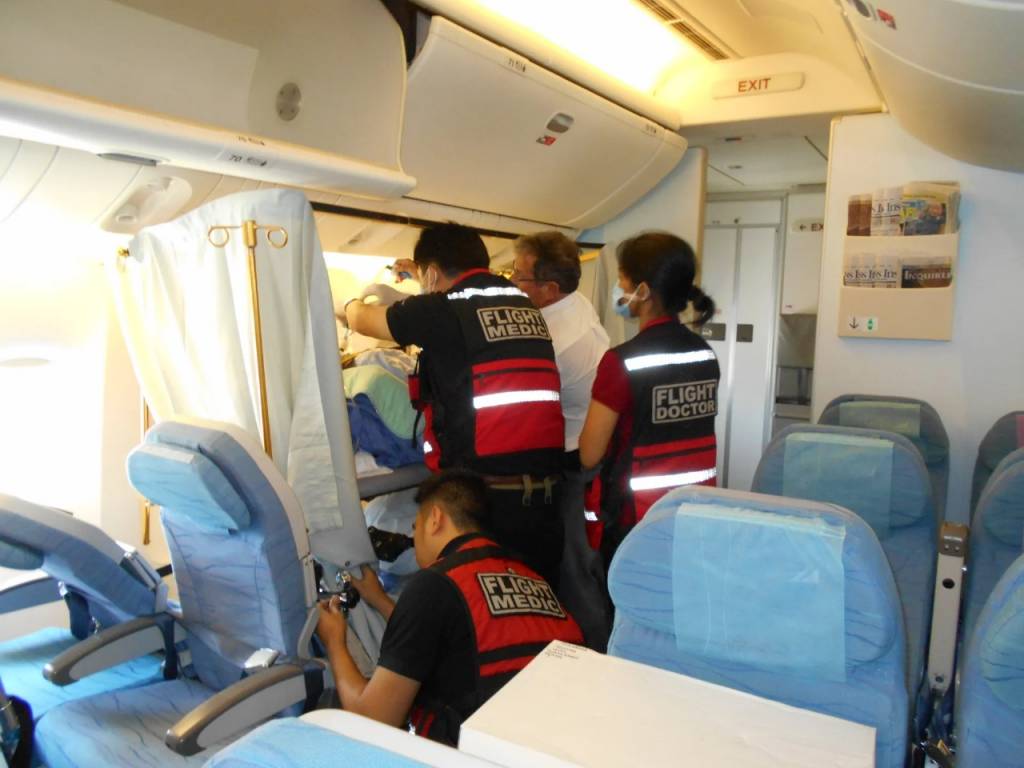
International travel for patients living with motor neuron disease (MND) requires careful preparation, particularly when the condition affects mobility, muscle strength, swallowing, or breathing. Long-distance journeys may involve extended periods of sitting, airport transfers, unfamiliar environments, and changes to daily care routines. For patients who depend on mobility aids or respiratory support, planning these arrangements in advance is especially important.
Some patients may need to travel internationally to return home, reunite with family, or access specialist medical services. An international medical escort may provide assistance during a commercial flight when the patient is medically suitable for this type of travel. The right arrangements depend on the patient’s symptoms, respiratory function, mobility, equipment requirements, and overall care needs.
Understanding Motor Neuron Disease and Its Impact on International Travel
Motor neuron disease is a group of progressive neurological conditions that affect the nerve cells responsible for controlling voluntary muscles. As these nerve cells become damaged, patients may develop muscle weakness, stiffness, difficulty speaking, swallowing problems, or respiratory complications.
The effects of MND vary considerably between individuals. During international travel, some patients may experience challenges such as:
Reduced mobility: Muscle weakness can make walking, transfers, and maintaining a comfortable position difficult.
Respiratory difficulties: Weakening respiratory muscles may affect breathing and require specialist assessment before flying.
Swallowing difficulties: Some patients need specific assistance with food, fluids, and medication.
Communication challenges: Speech changes may make it harder to communicate needs in busy airports or unfamiliar settings.
Fatigue: Extended travel and disrupted routines may increase tiredness.
Dependence on medical equipment: Certain patients may require ventilatory support, suction equipment, or other prescribed devices.
These challenges require individual assessment. A patient’s diagnosis alone does not determine whether they can fly; their current medical condition and the level of support required are important factors.
Why Medical Escort Support May Be Beneficial
Patients with MND may require additional assistance to manage the practical demands of an international journey. Depending on the patient’s needs, a medical escort may help coordinate travel arrangements and provide support during the journey.
Assistance may include:
Helping with airport navigation, boarding, and transfers.
Supporting mobility and positioning within the limits of the agreed service.
Helping the patient follow their established care plan.
Assisting with communication and coordinating information with family members.
Supporting planned medication routines within the escort’s professional scope.
Helping coordinate the use of approved medical equipment where appropriate.
Communicating with the receiving caregiver or family member about arrival arrangements.
The appropriate level of support depends on the patient’s medical requirements and the escort’s qualifications.
A commercial-flight medical escort is not a substitute for specialist respiratory care or an air ambulance when the patient needs continuous advanced treatment, complex monitoring, or medical interventions that cannot be provided appropriately on a commercial flight.
Preparing a Patient with Motor Neuron Disease for International Travel
Preparation should begin well before the planned departure date. Families should work with the treating neurologist, respiratory specialist, airline, and medical escort provider to determine whether the proposed journey is appropriate.
1. Obtain a Medical Assessment
The treating team should assess the patient’s current condition and ability to tolerate the planned journey. This may include reviewing respiratory function, swallowing difficulties, mobility, recent complications, and the patient’s usual level of support.
Patients with respiratory muscle weakness may require specific assessment of their ability to tolerate aircraft cabin conditions. The clinician should determine whether additional precautions or respiratory support are necessary.
Travel should not be confirmed until the patient’s fitness to fly and care requirements have been reviewed.
2. Review Respiratory Support Requirements
Some patients with MND use non-invasive ventilation or other respiratory equipment. Before travelling, the treating respiratory team should explain what support the patient requires during the journey.
Families should confirm airline policies concerning medical devices, batteries, oxygen, and advance approval. Not all equipment can be used or transported under the same conditions, and arrangements may differ between airlines.
If the patient requires respiratory support, the travel plan should specify how the equipment will be powered, transported, and accessed throughout the journey.
3. Plan Mobility and Seating Arrangements
Muscle weakness can make airport transfers and prolonged sitting difficult. Families should consider wheelchair assistance, accessible transfers, and the patient’s ability to remain comfortably seated for the expected flight duration.
Discuss the patient’s seating and positioning needs with the airline and escort provider before booking. If the patient cannot transfer into an aircraft seat independently, clarify what assistance is available and whether additional arrangements are necessary.
A comfortable and practical seating plan can help reduce avoidable strain during the journey.
4. Prepare Medication and Medical Documents
Keep prescribed medication and relevant medical records accessible throughout the journey.
Useful documents may include:
A recent medical summary.
Details of the patient’s diagnosis and current treatment.
An updated medication list and allergy information.
Respiratory support instructions, where applicable.
Details of medical equipment and its requirements.
Emergency contacts for the treating team and receiving caregiver.
Medical fitness-to-fly documentation requested by the clinician or airline.
Medication should be managed according to the treating team’s instructions. Do not change doses or treatment schedules simply to accommodate the flight without professional advice.
5. Consider Swallowing and Nutrition Needs
Some patients with MND experience dysphagia, which can make swallowing food, liquids, or medication difficult. These needs should be discussed with the treating clinician before travel.
Families should clarify whether the patient requires modified food textures, specific assistance with meals, or other established feeding arrangements. If the patient uses a feeding tube, the equipment, supplies, and care requirements must be considered as part of the travel plan.
Airline meal services may not meet every patient’s dietary or swallowing needs, so advance preparation is important.
Planning Medical Equipment for a Commercial Flight
Patients who depend on medical equipment need a detailed travel plan before departure.
Depending on the patient’s needs, this may involve:
Non-invasive ventilation: Confirm whether the patient’s prescribed device can be used during the flight and whether airline approval is required.
Portable suction equipment: If clinically necessary, confirm equipment requirements, power arrangements, battery capacity, and airline restrictions in advance.
Mobility equipment: Arrange wheelchair assistance and confirm how mobility aids will be handled during check-in, boarding, and arrival.
Backup planning: Discuss what to do if equipment fails, a flight is delayed, or a connection is missed. The plan should reflect the patient’s medical dependence on the equipment.
Specialist support: If the patient’s needs exceed what can safely be supported on a commercial flight, the treating team may recommend an alternative transport arrangement.
Families should never assume that a medical device can automatically be used onboard. Requirements vary by airline, equipment type, route, and individual medical circumstances.
What Families Should Consider Before Booking
Before confirming international travel, families should review the following questions with the treating team and escort provider:
Is the patient medically stable and suitable for a commercial flight?
Has respiratory function been assessed where necessary?
Does the patient require ventilation or other medical equipment during the journey?
Can the patient sit comfortably and tolerate the expected flight duration?
Are swallowing, nutrition, and medication needs clearly documented?
Have the airline’s equipment and assistance requirements been confirmed?
Is suitable care arranged at the destination?
Is a commercial-flight medical escort appropriate, or is specialist medical transport necessary?
Answering these questions early can help families choose arrangements that match the patient’s needs.
When Should Travel Be Postponed?
Travel may need to be delayed if the patient develops an acute illness, worsening breathing difficulties, a significant change in swallowing, or another complication that has not been assessed.
Patients with MND who experience new or worsening respiratory symptoms should seek prompt advice from their treating team before travelling.
Severe breathing difficulty, choking with an inability to breathe normally, or another potentially life-threatening symptom requires urgent medical attention.
The treating medical team must determine whether the patient is fit to fly. A medical escort cannot make an unsuitable journey safe simply by accompanying the patient.
How MedEscort International Can Help
MedEscort International assists patients and families who need support coordinating international medical travel. For patients with MND who have been assessed as suitable for commercial air travel, a medical escort may help coordinate practical arrangements and provide assistance during the journey within the agreed service.
Support may include:
Discussing the patient’s travel and assistance requirements with family members.
Coordinating airport transfers and boarding arrangements.
Helping families prepare relevant medical documentation.
Planning around mobility, communication, and comfort needs.
Coordinating practical considerations related to approved medical equipment.
Supporting communication with the receiving caregiver or family member.
Every case requires an individual assessment. Suitability depends on the patient’s medical condition, respiratory support needs, equipment requirements, airline policies, and the proposed route.
Contact MedEscort International
Phone: +91 9774900430
Website: medescortinternational.com
Contact MedEscort International to discuss the patient’s circumstances and explore suitable international travel arrangements.
Frequently Asked Questions
1. Can a patient with motor neuron disease travel internationally by plane?
Some patients with MND may be able to fly, but suitability depends on their respiratory function, mobility, swallowing ability, and overall medical condition. The treating team should assess the patient before travel.
2. Can patients using non-invasive ventilation travel on commercial flights?
Some may be able to, but the decision requires individual medical assessment and advance coordination with the airline. Equipment approval, power arrangements, and the level of support required must be confirmed before departure.
3. Is a medical escort necessary for every patient with MND?
No. The need for an escort depends on the patient’s independence, symptoms, mobility, and care requirements. Some patients may travel with family support, while others need dedicated assistance.
4. What medical documents should families prepare?
Families should generally carry a recent medical summary, medication list, allergy information, relevant respiratory support instructions, medical equipment details, emergency contacts, and any documentation required by the airline or treating clinician.
5. Can a medical escort provide advanced respiratory treatment during a flight?
The care an escort can provide depends on their qualifications and the agreed service. Patients who require continuous advanced respiratory intervention or specialist medical management may need a different transport arrangement.
6. Can MedEscort International help arrange international medical repatriation for patients with MND?
MedEscort International can discuss the patient’s condition and proposed journey to determine whether its medical escort service may be suitable. Arrangements depend on the level of care required, equipment needs, airline policies, and route availability.
Final Thoughts
International travel with motor neuron disease requires careful assessment, practical preparation, and coordination between the treating team, family, airline, and travel support provider. Reviewing respiratory needs, arranging mobility assistance, preparing medical records, and confirming equipment requirements can help families make informed decisions.
For patients who are medically stable but need additional support, an international medical escort may help manage the practical demands of a long-distance journey. The priority should always be to select a travel arrangement that matches the patient’s condition and care requirements.
Medical disclaimer: This article is intended for general informational purposes only and does not replace professional medical advice, diagnosis, or treatment. Patients with motor neuron disease should consult their treating healthcare professionals before making international travel arrangements.